
Diode lasers for laser-induced fusion: FBH and PTB lay the foundations for their qualification
The ATLase project is developing measurement systems and uniform standards for solid-state lasers
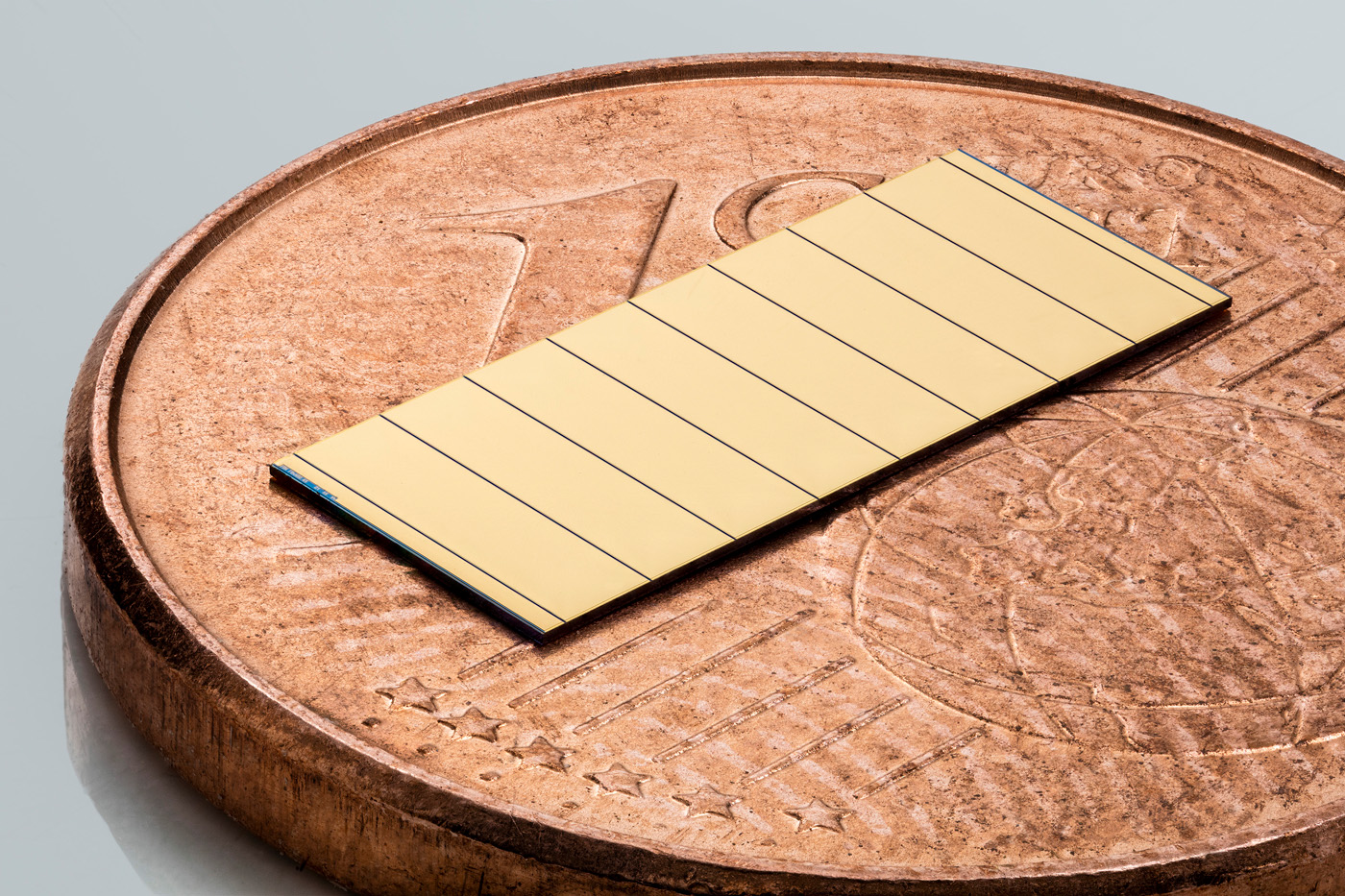
Ferdinand-Braun-Institut and the German national metrology institute Physikalisch-Technische Bundesanstalt (PTB) are establishing a competence center for qualifying high-power diode lasers as part of the ATLase project. These lasers are intended to serve as pump sources for solid-state lasers in future laser-induced fusion power plants. ATLase aims to establish the metrological basis for accurately assessing diode laser performance and reliability while preparing an international qualification standard.
Fusion power plants could contribute to a climate-neutral energy supply in the long term. In inertial confinement fusion (ICF, also commonly termed laser-induced fusion), high-energy laser pulses are used to trigger the fusion of light atomic nuclei. The solid-state lasers required for this process would eventually be pumped by high-power diode lasers. For the technology to become economically viable, these pump lasers must deliver high optical power, long lifetimes, and reliable operation.
The requirements are substantial: Each ICF power plant is estimated to need around 100 million diode laser bars, each capable of delivering in total 10 to 20 billion laser pulses without failure. Their performance and reliability therefore have a major impact on investment and operating costs. New measurement methods and standardized qualification criteria are needed to test, evaluate, and approve diode lasers for use under comparable conditions. This is where ATLase, a joint project of Ferdinand-Braun-Institut (FBH), and Physikalisch-Technische Bundesanstalt (PTB), comes in. FBH coordinates the project, which started on October 1, 2026.
Diode lasers for laser-induced fusion: accurately assessing performance and lifetime
How well do high-power diode lasers perform over extended periods, and how reliable are they? To answer these questions, FBH is building an advanced measurement infrastructure to accurately and efficiently assess their optical power, lifetime, and reliability. Accelerated aging tests will enable comprehensive studies into how and why high-power diode lasers, including novel wavelength-stabilized devices with multiple p-n junctions, gradually lose optical power or fail abruptly during quasi-continuous-wave (QCW) operation. The findings will provide a basis for targeted improvements in diode laser lifetime and reliability. Another key focus is power conversion efficiency, which indicates how much of the electrical input power diode lasers convert into optical power. High efficiency is essential for the cost-effective operation of these lasers in ICF power plants.
PTB contributes its expertise in precise and traceable optical power measurements. It is developing a laser power measurement system calibrated against national measurement standards. The system is designed to measure pulsed optical power of up to one kilowatt with a relative measurement uncertainty of less than one percent. PTB will also build an identical unit to serve as a secondary reference system, which it will transfer to FBH. This will lay the foundation for reliable and comparable measurement results.
Together, the partners are developing a qualification protocol to enable reproducible measurements based on standardized criteria. FBH plans to offer these qualification services to manufacturers, system integrators, and research institutions starting in the project's third year.
International standards and collaboration
ATLase also aims to contribute to an international standard through the measurement methods and qualification criteria developed in the project. In cooperation with the German Commission for Electrical, Electronic & Information Technologies (DKE), FBH will initiate and lead the development of a joint standard by the International Electrotechnical Commission (IEC) and the Institute of Electrical and Electronics Engineers (IEEE). The project findings will be discussed and refined with experts from industry and academia. This includes members of the international STARFIRE Laser Diode Technology Working Group, which FBH jointly coordinates with Lawrence Livermore National Laboratory (LLNL) in the United States.
ATLase also collaborates with VEGA, a hub targeting laser-induced fusion funded by the German Federal Ministry of Research, Technology and Space (BMFTR) and coordinated by Focused Energy and Marvel Fusion. The competence center also aims to support companies and research institutions within the hub in assessing the performance of newly developed diode lasers and qualifying them for use in various types of large-scale laser facilities.
The FBH ATLase subproject receives €2.618 million in funding from the German Federal Ministry of Research, Technology and Space (BMFTR) under its program “Fusion 2040 – Research on the Way to the Fusion Power Plant”, which is part of Germany’s High-Tech Strategy. The grant number is 13F1054A.
Contact:
Ferdinand-Braun-Institut gGmbH, Leibniz-Institut für Höchstfrequenztechnik
Petra Immerz
Communications Manager
Gustav-Kirchhoff-Straße 4, 12489 Berlin
+49 30 6392-2626
petra.immerz(at)fbh-berlin.de
www.fbh-berlin.de
FBH press release, 26.11.2026