
Materials research: BESSY and the bronze sword
A historic artefact was examined at the Adlershof Particle Accelerator
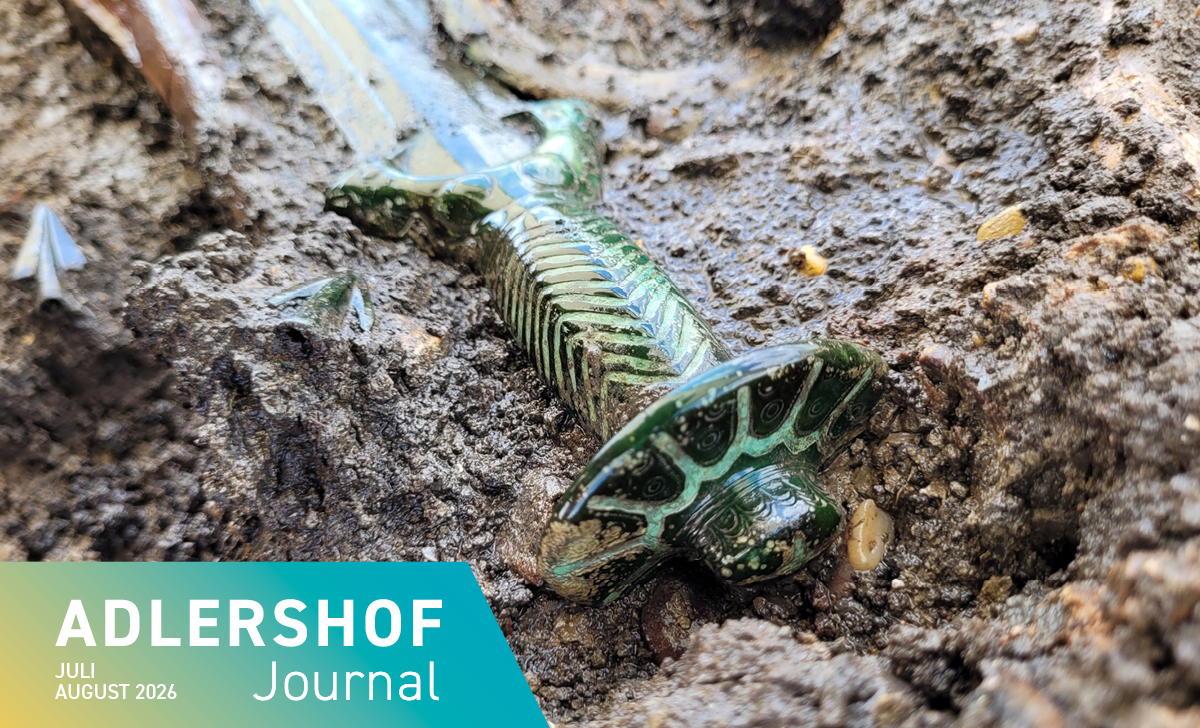
A weapon is not the sort of object you would expect to find at a particle accelerator. Yet earlier this year, a Bronze Age sword found its way to Berlin: 60 centimetres long, richly decorated, more than 3,400 years old. Archaeologists had unearthed the remarkably well-preserved weapon near Nördlingen in 2023. Now it’s BESSY II’s turn to coax secrets from it.
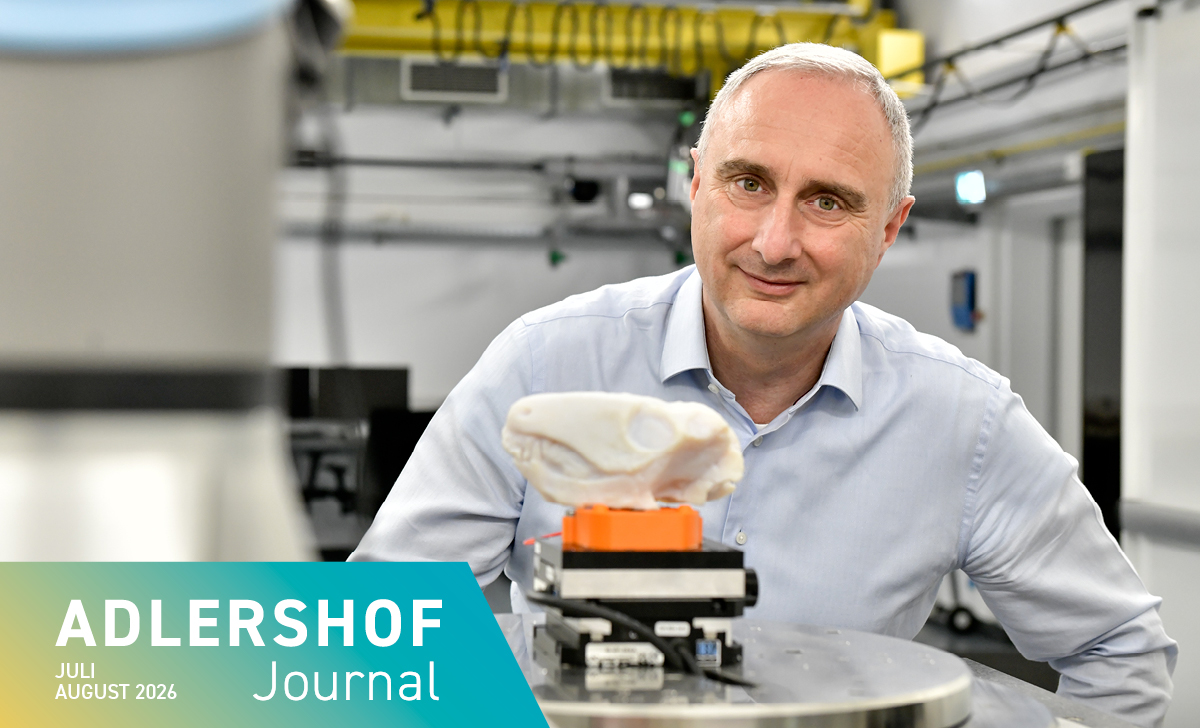
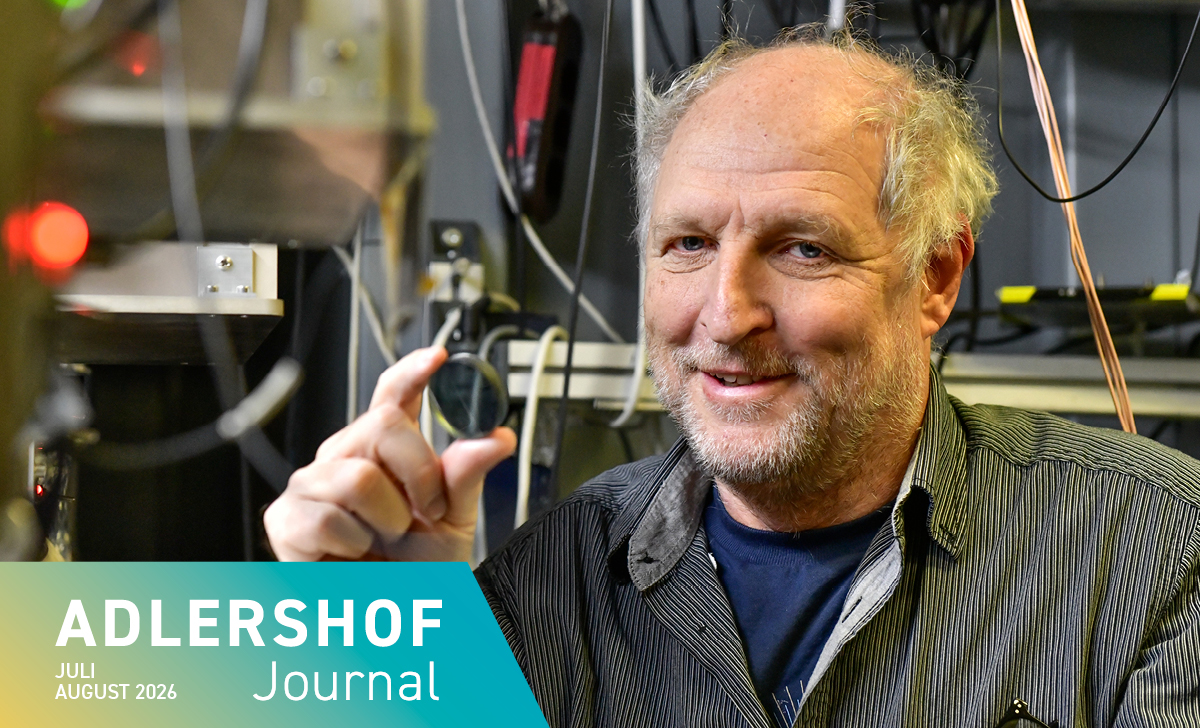
While doing so, researchers hardly get to see the sword itself. To protect the fragile artefact, it remains sealed beneath a protective plastic covering. Their tools have no problem penetrating it, however. Layer by layer, computed tomography and the instruments of the so-called BAMline see through the sword and its packaging, creating a detailed digital reconstruction on the screens. In their day-to-day work, the researchers at BESSY II deal with materials for batteries, for solar cells, or for next-generation medical technology. Historical artefacts may be brought in on occasion. However, a Bronze Age sword preserved in such exceptional condition is a rarity. As such, it has stirred some considerable excitement. “Having such a beautiful object that you can really relate to is a wonderful change,” says Martin Radtke from the Federal Institute for Materials Research and Testing (BAM). He is responsible for the BAMline, BAM's experimental station at the BESSY II synchrotron. His colleague Nikolay Kardjilov from Helmholtz-Zentrum Berlin (HZB) adds: “Whenever I see an object made by people so long ago, my thoughts revolve around the lives they must have lived.” Together with conservator Beate Herbold and archaeologist Johann Friedrich Tolksdorf from the Bavarian State Office for Monument Protection, the Berlin-based researchers are reconstructing how the sword was originally manufactured and what traces of those techniques remain embedded in the metal today.
Computed tomography reveals even the tiniest details. It makes visible tiny air bubbles left behind during casting, or microscopic cracks and traces of more than three millennia of corrosion inside the blade. The decorations on the sword's hilt are particularly noteworthy. The digital scans can reveal that the wires forming the geometric patterns were originally inlaid into fine grooves cut into the metal.
“We could see the movement of the hand that made them,” says Kardjilov. More than three thousand years later, the researchers can still identify clues to how the sword was cast, worked and decorated. They were even able to reconstruct the position in which the sword most likely lay inside its mould during casting, based on the distribution of larger air bubbles trapped within the metal.
While computed tomography reveals the object's internal structure and form, its chemical composition is investigated at the BAMline. Using X-ray fluorescence spectroscopy, the researchers analysed the decorative inlays on the hilt. One result came as a surprise: the inlaid wires turned out to be made of copper. The archaeologists had originally expected them to contain tin.
The sword from Nördlingen is not the only historical artefact to be examined at HZB using these methods. Archaeologists and conservators increasingly work alongside materials scientists to investigate fragile cultural objects without damaging them. Previous projects have included a mammoth skull with a tumour hidden inside its jaw or folded papyrus fragments whose concealed texts were revealed without being opened. The famous Nebra Sky Disc was also analysed at BESSY II.
The combination of different techniques opens up entirely new possibilities. Computed tomography provides detailed three-dimensional images of an object's internal structure, while synchrotron radiation reveals its chemical composition. “Only by combining both methods did we get the complete picture,” says Kardjilov.
The way museums work with historical collections is changing as well. Increasingly, they are digitising their collections to document objects for the long term and make them more accessible for research. For Kardjilov, this is only the beginning. “We're trying to understand how people thought back then and what mattered to them.” For the researchers in Berlin, that is what makes projects like these so rewarding. Behind the data, cross-sectional images and elemental analyses, it is the people who created these objects thousands of years ago that come back into view.
Kai Dürfeld for Adlershof Journal