• Skip to Page content
  • Skip to Management
  • Skip to Main menu
Adlershof - science at work
  • WISTA
  • WISTA.Plan
  • WISTA.Service
  • WISTA direkt
  • Search
    • de
    • en
  • Adlershof - science at work
  • Technology Park
    • Companies / Institutes
    • Science City in numbers
    • Direction / Maps
      • Bus / Train
      • By Car
      • Bicycle
      • Orientation / Maps
      • Trail of Thoughts
  • Newsroom
    • Overview
    • News
      • Social Media Stream
      • Success Stories
    • Events / Calendar
      • Adlershof Connect
      • Long Night of Sciences Berlin
      • Adlershof Research Forum
    • Adlershof Journal
    • Hot Topics
      • Grand Challenges
      • Circular Economy
      • Climate change mitigation
      • Digital infra­structure / 5G campus network
    • Photos / Flyer / Downloads
      • Magazine archive
    • WISTA-Editorial Staff
  • Science / Technology
    • Overview
    • Technology Centres
      • Photonics / Optics
      • Biotech­nology / Envi­ron­ment
      • Micro­systems / Materi­als
      • IT / Media
      • Renewable Energy / Photovoltaics
    • Non-university Research
    • Universities / Colleges
      • Humboldt-Universität zu Berlin
      • Services for Students
    • Young Talents / STEM / School Labs
    • Start-Ups
      • Adlershof Start-Up Centre IGZ
      • Adlershof Startup Lab
    • Networks / Management
      • Campus Club Adlershof
      • workhier! Academics Career Programme
      • WISTA Academy
  • TV / Media
    • TV and Movie Production
    • Media Services / Companies
    • News and Events
    • Filming Locations
    • Costume Hire
    • GDR Film Archive
    • Tickets / Booking
  • Properties
    • Overview
    • Real Estate Rent
      • Office Space / Workspace / Laboratories
    • Real Estate Offers
      • Commercial Properties
    • ST3AM Working Environments / Coworking
    • Residential
    • Construction
      • Building Projects
      • Architecture
      • Time-lapse footage
  • Service
    • Overview
    • Gastronomy / Leisure / Shopping
    • Jobs / Market
    • Social and Healthcare Facilities
    • WISTA-Business Services
    • Event Services / Guided Tours / Hotels
    • Facility Management
    • Downloads / Photos / Videos
    • Jobs for Refugees
  • Hood
    • Overview
    • History
    • Nature Park
    • Culture
    • Technology Park
    • Digital Tours
  • WISTA
  • WISTA.Plan
  • WISTA.Service
WISTA direkt
  • Home Technology Park
  • Newsroom
  • News

News

  • Overview
  • News
  • Events / Calendar
  • Adlershof Journal
  • Hot Topics
  • Photos / Flyer / Downloads
  • WISTA-Editorial Staff
  • Home Technology Park
  • Newsroom
  • News
17. June 2025

Michael Naguib is visiting HZB as a Humboldt Research Awardee

The US scientist received funding to research novel nanomaterials for energy and environmental applications
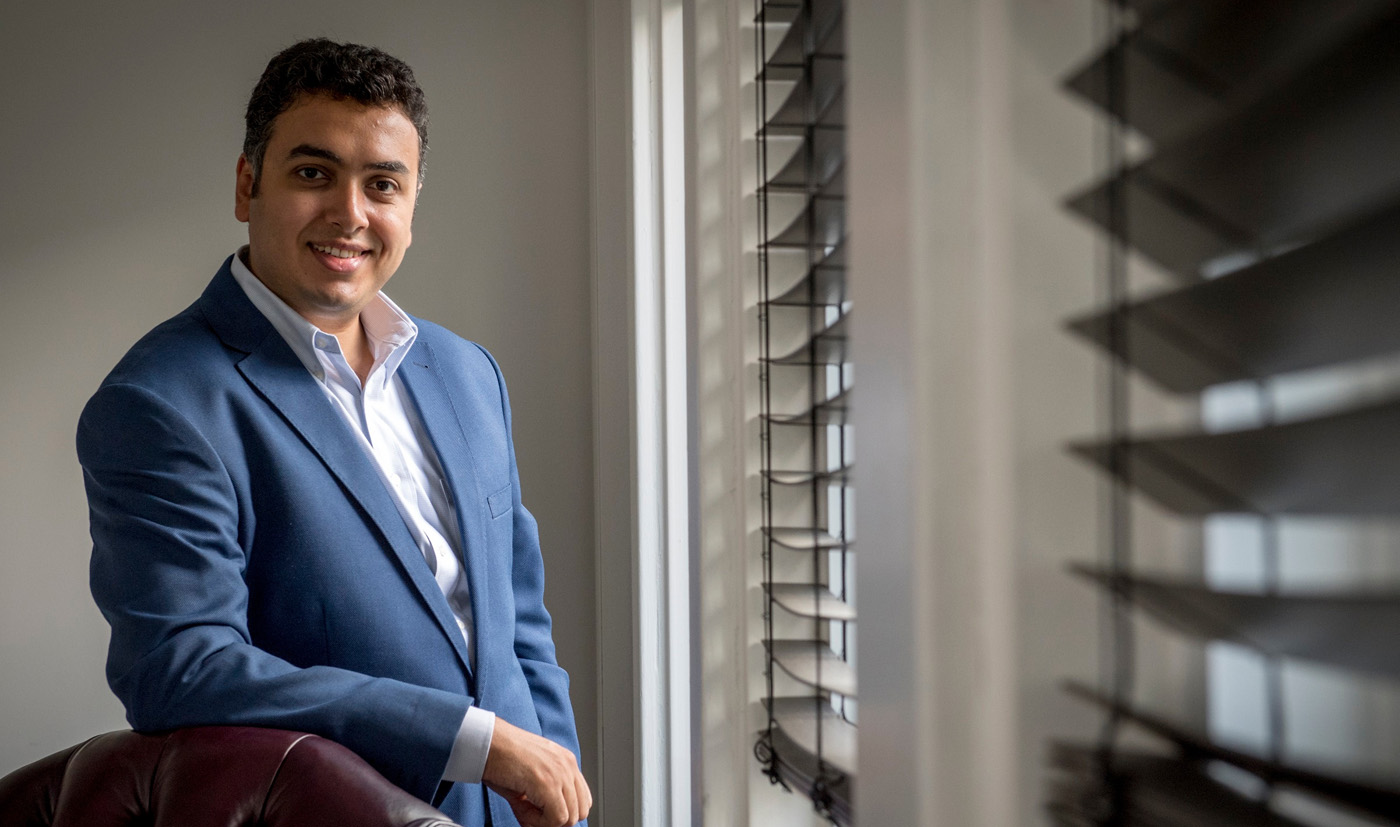
Portrait Michael Naguib
© Paula Burch-Celentano/ Tulane University

Professor Michael Naguib, from Tulane University in the USA, is one of the discoverers of a new class of 2D materials: MXenes are characterised by a puff pastry-like structure and have many applications, such as in the production of green hydrogen or as storage media for electrical energy. During his Humboldt Research Award in 2025, Professor Naguib is working with Prof Volker Presser at the Leibniz Institute for New Materials in Saarbrücken and with Dr Tristan Petit at HZB.

Michael Naguib, Ph.D., is an Ken & Ruth Arnold Early Career Professor in Science and Engineering at Tulane University in New Orleans, Louisiana, USA. He is a leading expert in the field of two-dimensional materials. His research group at Tulane University focuses on the synthesis and characterization of novel nanomaterials, including MXenes and Transition Metal Carbo-chalcogenides, for energy and environmental applications.

He completed his doctorate in 2014 at Drexel University, where he was involved in the discovery of a new class of materials. At that time, he tested MAX phases (layered ceramics) as electrode materials for lithium batteries. To create more space for the lithium ions, he used an acid and discovered that the “A” layers in the MAX phases had been selectively removed, transforming the remaining MX layers into a structure that, under a scanning electron microscope, resembled puff pastry: MXene.

To date, a wide range of MXenes have been synthesised. Their applications are also highly diverse: MXenes can be used as electrodes for energy storage devices, in catalysis and as sensors for medical applications. ‘I am delighted to deepen our collaboration with Tristan Petit and his team at HZB,’ says Naguib. ‘We will be discussing several fundamental questions regarding our novel materials and preparing a series of experiments to conduct at BESSY II to help us answering these questions.’

More information on Humboldt Research Award

Contact:

Helmholtz-Zentrum Berlin für Materialien und Energie
Young Investigator Group Nanoscale Solid-Liquid Interfaces
CE-NSLI-office(at)helmholtz-berlin.de
www.helmholtz-berlin.de


Source: HZB, 16 June 2025

Research Success Stories Microsystems / Materials

Related News

Image from scanning electron microscope

MXenes boost the effectiveness of catalysts for the production of green hydrogen

HZB team shows a new way to highly efficient and inexpensive catalysts
Surface of a Vanadium carbide MXene © B. Schmiedecke/HZB

MXenes show talent as catalyst for the production of green hydrogen

This class of materials is more stable and efficient than the best metal oxide catalysts currently available
Scanning X-ray images of a dismounted Li-ion battery with cycled MXene electrode © HZB

MXenes for energy storage: Chemical imaging more than just surface deep

Scanning X-ray microscopy (SXM) at MAXYMUS beamline of BESSY II enables the characterization of layered materials in complex systems
The experiment at BessyII © M. Künsting /HZB

HZB team investigates charge transport in MXenes

Superstore MXene are considered an exciting new class of materials for energy storage
first image taken by MYSTIIC © HZB

New X-ray microscope put into operation at BESSY II

MYSTIIC offers higher precision and more options for scanning surfaces and investigating bulk samples in transmission
MXenes © Martin Künsting/HZB

New class of materials for energy storage researched at HZB

2D titanium carbides store large amounts of electrical energy and can be charged and discharged in a matter of seconds

Share this page

The development of the Science and Technology Park Berlin Adlershof was and is co-financed by the European Union namely by EFRE. This concerns infrastructure development like construction of technology centres. Furthermore EFRE is used for international projects.

  • © WISTA Management GmbH
  • Legal Notice
  • Privacy Policy
  • Social Media Guide
  • FAQ
  • Contact
  • Press
  • Newsletter
  • RSS
  • International
Member of:
Zukunftsort Adlershof Logo