• Skip to Page content
  • Skip to Management
  • Skip to Main menu
Adlershof - science at work
  • WISTA
  • WISTA.Plan
  • WISTA.Service
  • WISTA direkt
  • Search
    • de
    • en
  • Adlershof - science at work
  • Technology Park
    • Companies / Institutes
    • Science City in numbers
    • Direction / Maps
      • Bus / Train
      • By Car
      • Bicycle
      • Orientation / Maps
      • Trail of Thoughts
  • Newsroom
    • Overview
    • News
      • Social Media Stream
      • Success Stories
    • Events / Calendar
      • Adlershof Connect
      • Long Night of Sciences Berlin
      • Adlershof Research Forum
    • Adlershof Journal
    • Hot Topics
      • Grand Challenges
      • Circular Economy
      • Climate change mitigation
      • Digital infra­structure / 5G campus network
    • Photos / Flyer / Downloads
      • Magazine archive
    • WISTA-Editorial Staff
  • Science / Technology
    • Overview
    • Technology Centres
      • Photonics / Optics
      • Biotech­nology / Envi­ron­ment
      • Micro­systems / Materi­als
      • IT / Media
      • Renewable Energy / Photovoltaics
    • Non-university Research
    • Universities / Colleges
      • Humboldt-Universität zu Berlin
      • Services for Students
    • Young Talents / STEM / School Labs
    • Start-Ups
      • Adlershof Start-Up Centre IGZ
      • Adlershof Startup Lab
    • Networks / Management
      • Campus Club Adlershof
      • workhier! Academics Career Programme
      • WISTA Academy
  • TV / Media
    • TV and Movie Production
    • Media Services / Companies
    • News and Events
    • Filming Locations
    • Costume Hire
    • GDR Film Archive
    • Tickets / Booking
  • Properties
    • Overview
    • Real Estate Rent
      • Office Space / Workspace / Laboratories
    • Real Estate Offers
      • Commercial Properties
    • ST3AM Working Environments / Coworking
    • Residential
    • Construction
      • Building Projects
      • Architecture
      • Time-lapse footage
  • Service
    • Overview
    • Gastronomy / Leisure / Shopping
    • Jobs / Market
    • Social and Healthcare Facilities
    • WISTA-Business Services
    • Event Services / Guided Tours / Hotels
    • Facility Management
    • Downloads / Photos / Videos
    • Jobs for Refugees
  • Hood
    • Overview
    • History
    • Nature Park
    • Culture
    • Technology Park
    • Digital Tours
  • WISTA
  • WISTA.Plan
  • WISTA.Service
WISTA direkt
  • Home Technology Park
  • Newsroom
  • News

News

  • Overview
  • News
  • Events / Calendar
  • Adlershof Journal
  • Hot Topics
  • Photos / Flyer / Downloads
  • WISTA-Editorial Staff
  • Home Technology Park
  • Newsroom
  • News
26. June 2026

How long do perovskite solar cells last?

Study from the HZB shows which methods are useful for predicting long-term stability and where further research is needed
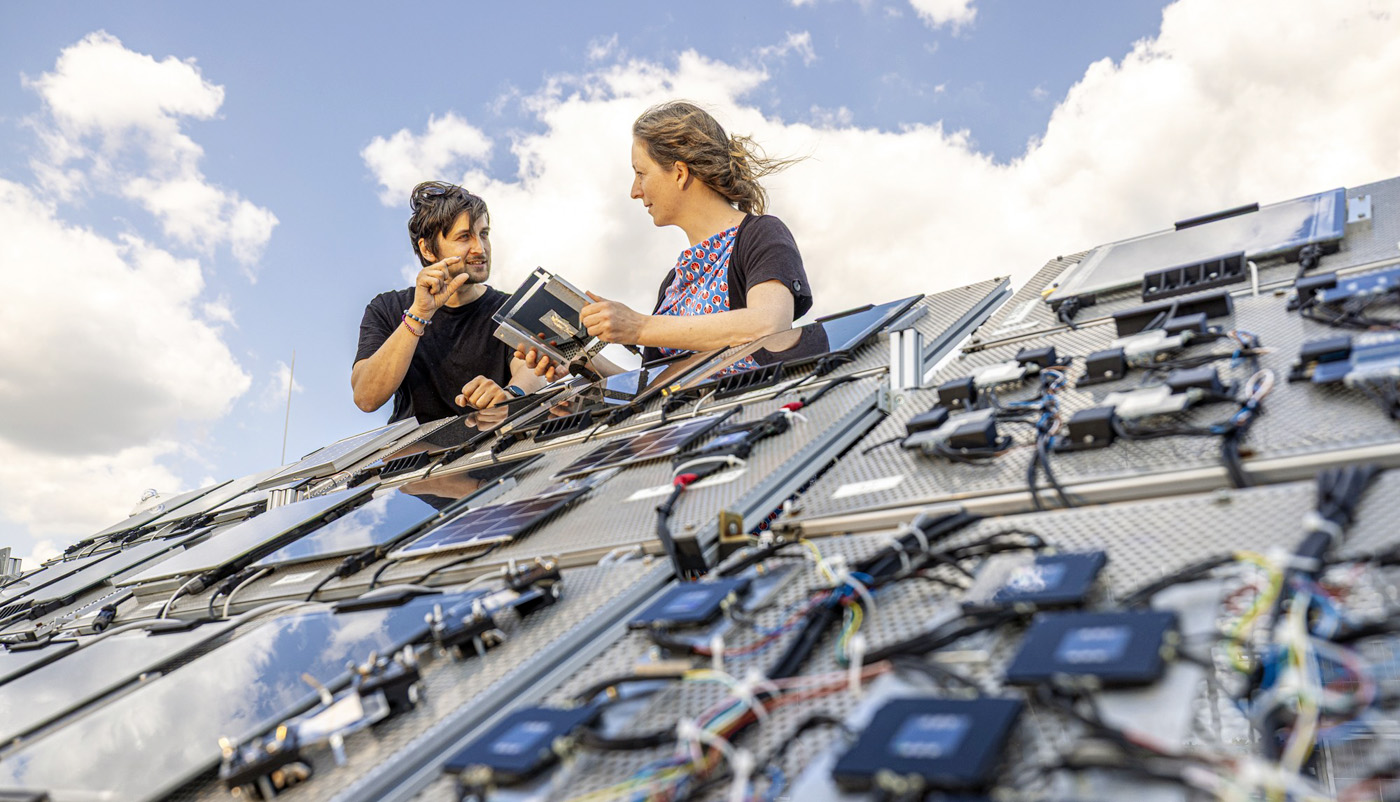
Two people at a system with lots of small solar cells
The HZB-team runs an outdoor laboratory in Berlin where a great variety of solar cells are exposed for months and years to real-world conditions. © Industriefotografie Steinbach/ HZB
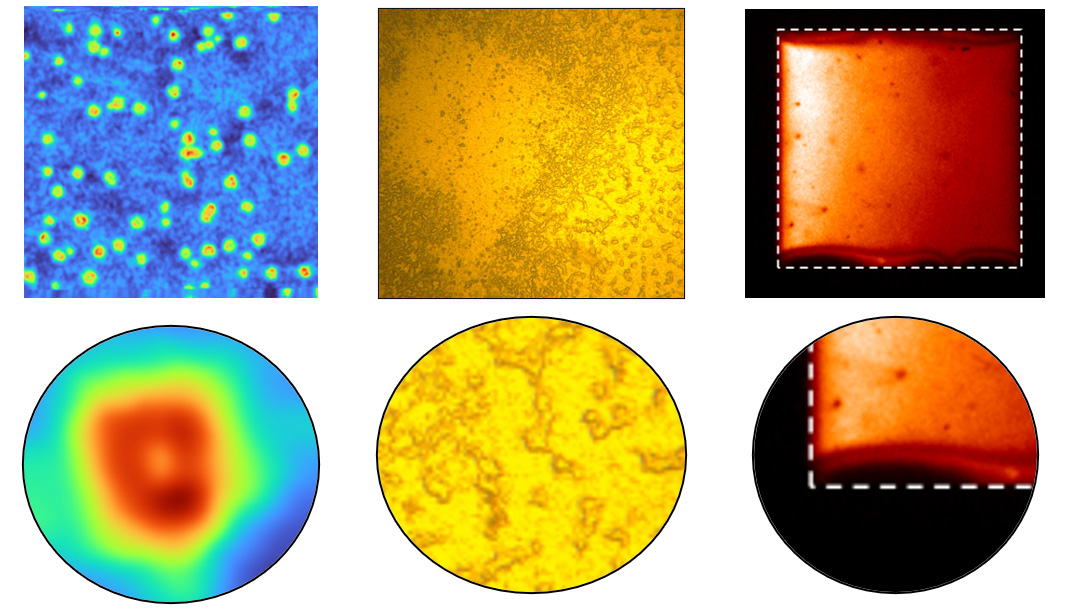
Microscopic images of materials in various colours
Three key degradation mechanisms were observed in PSCs that had undergone natural ageing in HZB’s outdoor laboratory in Berlin. The most significant of these is phase segregation (left), whereby the compositional changes in perovskite material lead to the formation of circular domains a few micrometres in diameter. The other two mechanisms are copper corrosion (middle) and edge patterns (right), which are primarily related to cell design. © HZB

Perovskite solar cells (PSCs) could conquer the mass market within a few years, perhaps even being produced in Europe. Their large-scale production is highly cost-effective, and unlike silicon solar cells, their production is less energy intensive. However, perovskite solar cells ideally need to  achieve decades-long warranties, which remains a challenge. To assess their long-term stability, various test methods are used to accelerate ageing. But how accurately do these methods reflect the actual degradation processes? A new study in Joule by a team led by Dr Carolin Ulbrich (HZB) and Andreas Bartelt (HTW Berlin) now answers this question.

Natural degradation mechanisms

In the study, naturally aged perovskite solar cells were compared with 'artificially aged' perovskite solar cells. First, the team identified three key degradation mechanisms in PSCs that had undergone 20 months of natural ageing in HZB’s outdoor laboratory in Berlin under real-world conditions. The most significant of these is phase segregation, whereby the compositional changes in perovskite material lead to the formation of circular domains a few micrometres in diameter. The other two mechanisms are copper corrosion and edge patterns, which are primarily related to cell design. In the laboratory, they subjected newly produced PSCs to various accelerated ageing processes and investigated how well the three observed degradation phenomena could be replicated.

How to accelerate the aging process?

A very common method to accelerate the aging processes is to keep the samples at elevated temperatures (65-85 °C). In a previous study, the group demonstrated that this method triggered an additional degradation mechanism that is not observed at lower temperatures or in outdoor-aged samples. As a result, the group turned to alternative methods for accelerating degradation.

Aging under 2.3 suns

Degradation phenomena can also be intensified by increasing the light intensity or by varying the electrical bias. ‘Increasing the light intensity from one sun to 2.3 suns accelerates all three degradation mechanisms while preserving the spatial trends observed outdoors, thus enabling ageing in fast-forward,’ says Ulas Erdil, first author of the study. However, whilst different bias voltages (aging under open-circuit condition) also promote phase segregation, they simultaneously affect the spatial extent of copper corrosion and the formation of edge patterns, meaning that the degradation is no longer representative of the real-world degradation.

A useful tool

As this study further shows, reliable lifetime predictions through accelerated ageing tests currently remain challenging. ‘However, they are useful tools for the rapid screening of new materials or cell designs and can therefore help to advance the development of perovskite technology,’ says Erdil.

‘We do not yet have the perfect solution for reliably predicting long-term stability,’ emphasises Carolin Ulbrich. ‘But we are one step closer; we now know that more intense light is one key parameter for accelerating the ageing process.’

Publications:

Joule (2026): From Outdoor to Accelerated Aging: Replicating Spatially Non-Uniform Degradation Modes in Perovskite Solar Cells
Ulas Erdil, Lars Bergenholtz, Mark Khenkin, Marko Remec, Florian Ruske, René Schwiddessen, Guillermo Farias-Basulto, Phillipe Holzhey, Erik Wutke, Quiterie Emery, Wander Max Bernardes de Araujo, Lorenzo Angiolini, Roland Mainz, Bernd Stannowski, Steve Albrecht, Eugene A. Katz, Rutger Schlatmann, Antonio Abate, Carolin Ulbrich, Andreas Bartelt
DOI: 10.1016/j.joule.2026.102538

Solar RRL (2025): Bridging Accelerated Indoor Aging and Outdoor Stability of Perovskite Solar Cells Using a Bayesian Modeling Framework
Joseph Chakar, Ulas Erdil, Antoine Burgaud, Marko Remec, Antonio Abate, Carolin Ulbrich, Rutger Schlatmann, Yvan Bonnassieux, Mark Khenkin, Jean-Baptiste Puel
DOI: 10.1002/solr.202500716

Contact:

Helmholtz-Zentrum Berlin für Materialien und Energie (HZB)

Dr. Carolin Ulbrich
Institute Competence Centre Photovoltaics Berlin (PVcomB)
(030) 8062-18140
carolin.ulbrich(at)helmholtz-berlin.de

Dr. Antonia Rötger
Press Officer
(030) 8062-43733
antonia.roetger(at)helmholtz-berlin.de


HZB press release, 25.06.2026

Research Renewable Energies Microsystems / Materials Grand Challenges Sustainability

Related News

Stylised illustration: two figures are pushing a layer of material into a pile of other materials

Novel perovskite triple-junction solar cell with 27.3% efficiency developed

The triple-junction solar cell from HZB is not only efficient, but also long-term stable, lightweight and inexpensive
Two researchers are looking trough a glas pane

Bright prospects for tin perovskite solar cells

Tin-based perovskites promise enormous potential for the production of environmentally friendly, stable solar cells
Illustration of material composition

Long-term stability for perovskite solar cells: a big step forward

A Teflon-like layer ensures exceptional stability and consistent efficiency
Visualised test scenario

Perovskite solar cells under stress test

Research team identifies thermal stresses as the key to long-term stability
Coatings of thin-film solar cells © HZB

Solar cells produced from liquid inks were tested under real life conditions in the field

HZB team optimises metal halide perovskites for the slot die coater – a step towards industrial production

Related Institutions

  • Helmholtz-Zentrum Berlin für Materialien und Energie GmbH, Elektronenspeicherring BESSY II
  • Helmholtz-Zentrum Berlin für Materialien und Energie GmbH, HySPRINT
  • Helmholtz-Zentrum Berlin, PVcomB Kompetenzzentrum Dünnschicht- und Nanotechnologie für Photovoltaik Berlin

Share this page

The development of the Science and Technology Park Berlin Adlershof was and is co-financed by the European Union namely by EFRE. This concerns infrastructure development like construction of technology centres. Furthermore EFRE is used for international projects.

  • © WISTA Management GmbH
  • Legal Notice
  • Privacy Policy
  • Social Media Guide
  • FAQ
  • Contact
  • Press
  • Newsletter
  • RSS
  • International
Member of:
Zukunftsort Adlershof Logo