
Taiga forests store carbon in the permafrost
HU study demonstrates the ecosystem service provided by boreal forests as a key contribution to climate protection
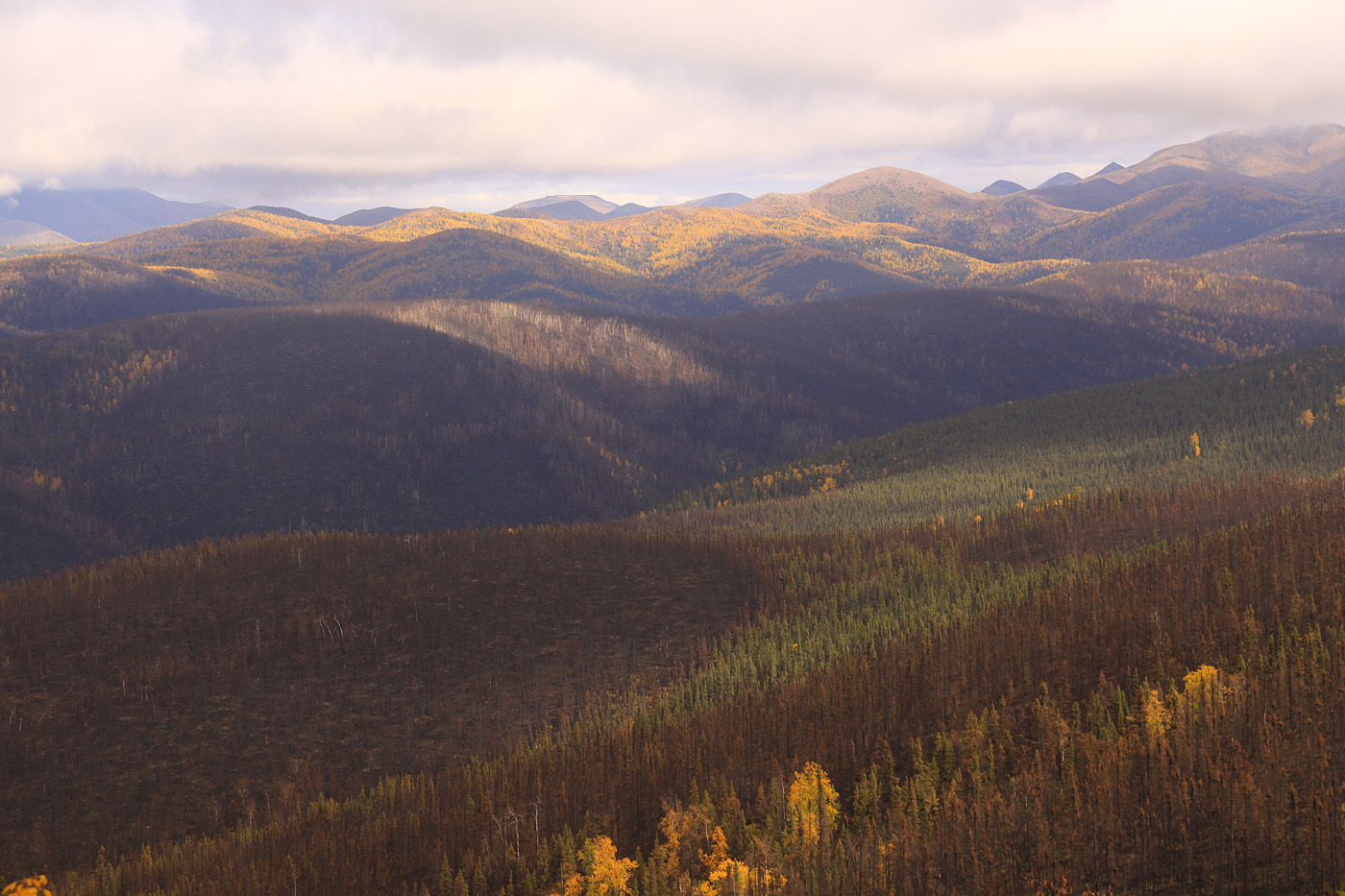
A study by HU shows that, from Alaska to Siberia, boreal forests make a significant contribution to climate protection. The tree canopies protect the frozen ground from thawing deeper down, ensuring that the carbon remains stored there.
The boreal forest – also known as the taiga – is the northernmost and, at the same time, the largest forest region on Earth. It stretches from Alaska through Canada and Scandinavia to Siberia. Where boreal forests grow on continuous permafrost, they fulfil an important climate protection function: the tree canopies shade the ground and protect the permanently frozen subsoil from thawing. In this way, they help to store large quantities of carbon in the permafrost.
The boreal forest thus plays a central role in the global carbon cycle and the climate system. This ecosystem service has now been quantified for the first time and compared with other natural carbon sinks. The results show that boreal forests indirectly conserve significant amounts of carbon in the permafrost.
Protecting boreal forests is essential for the climate
Until now, the climate benefits of boreal forests have been measured primarily in terms of the carbon contained in tree biomass. Their function as a thermal protective layer over the permafrost – and thus over a far larger carbon store – has not been taken into account. “An important climate benefit of these forests lies not in the trees, but beneath them. The tree canopies keep the permafrost soil cool and thus keep a carbon reserve frozen that far exceeds the biomass of the trees. If the forest disappears, the soil loses this protection,” says Dr Simone Maria Stünzi.
The researcher at the Department of Geography at Humboldt-Universität zu Berlin (HU), together with colleagues from the Alfred Wegener Institute (Potsdam), the University of Oslo and Vrije Universiteit Amsterdam, has investigated the extent to which boreal forests provide thermal protection for permafrost soil. The study was published in Nature Climate Change.
The study’s findings are directly relevant to international climate protection efforts. “59 petagrammes – that is, 59 gigatonnes – of carbon are currently stored in the permafrost solely due to the cooling effect of the tree canopies – a climate-relevant quantity on a global scale. This makes the protection of these forests a climate issue of the highest priority,” says Stünzi.
Damage to or loss of these forest areas, for example through deforestation, forest fires or other disturbances, would therefore have far-reaching consequences. Not only would the carbon stored in the trees themselves be released. With the loss of the insulating vegetation cover, the ground thaws to a greater depth seasonally, allowing the carbon bound there to be broken down by microbes. On a far larger scale, the carbon that has been bound in the permafrost for millennia could thus also be released into the atmosphere. A particularly critical factor is that this carbon store has largely been built up since the last ice age and would be virtually impossible to restore on human timescales.
Carbon stored in biomass and soil
For their study, the researchers combined various geodata sets and analysed them using models that simulate the thermal exchange between boreal forests and permafrost soils. For 16 bioclimatic regions within the continuous permafrost zone, they compared the soil heat balance with and without forest cover, supplemented by satellite data and a meta-analysis of existing data on carbon stocks. Uncertainties arise primarily from the resolution of the satellite data, simplifying assumptions in the model and the uneven distribution of the soil carbon dataset.
In boreal forests within the continuous permafrost zone, the tree canopy keeps the soil significantly cooler than in open areas: The seasonal thaw depth – the depth to which the ground thaws during the warm months – is 50 to 62 per cent shallower under forest cover. This corresponds to an average difference of around one metre. For the first time, the study quantifies this protective effect for the entire Arctic permafrost region: The insulation provided by the tree canopies keeps around 59 petagrams (Pg) of additional soil carbon in a frozen state, which corresponds to 32 per cent of the carbon sequestered in forested permafrost soil. Without the cooling and stabilising effect of boreal forests, up to 40 Pg of carbon in the permafrost would become accessible to microbial decomposition.
In regions rich in ice, the forests also fulfil another important function: they reduce the formation of thermokarst – erosion processes that occur when the permafrost thaws, exposing layers of soil. In this way, the forests additionally protect around 19 Pg of carbon that might otherwise be released over the long term. These quantities of carbon kept frozen are several times greater than the reserves stored in biomass (7 to 19 Pg), a store that previous carbon budgets have not accounted for because they only take the vegetation itself into consideration.
Further information:
Study “Canopy-mediated climate feedbacks in the boreal continuous permafrost zone”
Contact:
Dr. Simone Maria Stünzi
Department of Geography
Humboldt-Universität zu Berlin
Earth Observation Lab
+49 30 2093-45848
simone.maria.stuenzi.1(at)hu-berlin.de
HU press release, 28.07.2026