
How storms and insect infestations improve habitats for bison, elk and red deer
HU study shows that increasing disturbances in forests have a positive effect on large herbivores
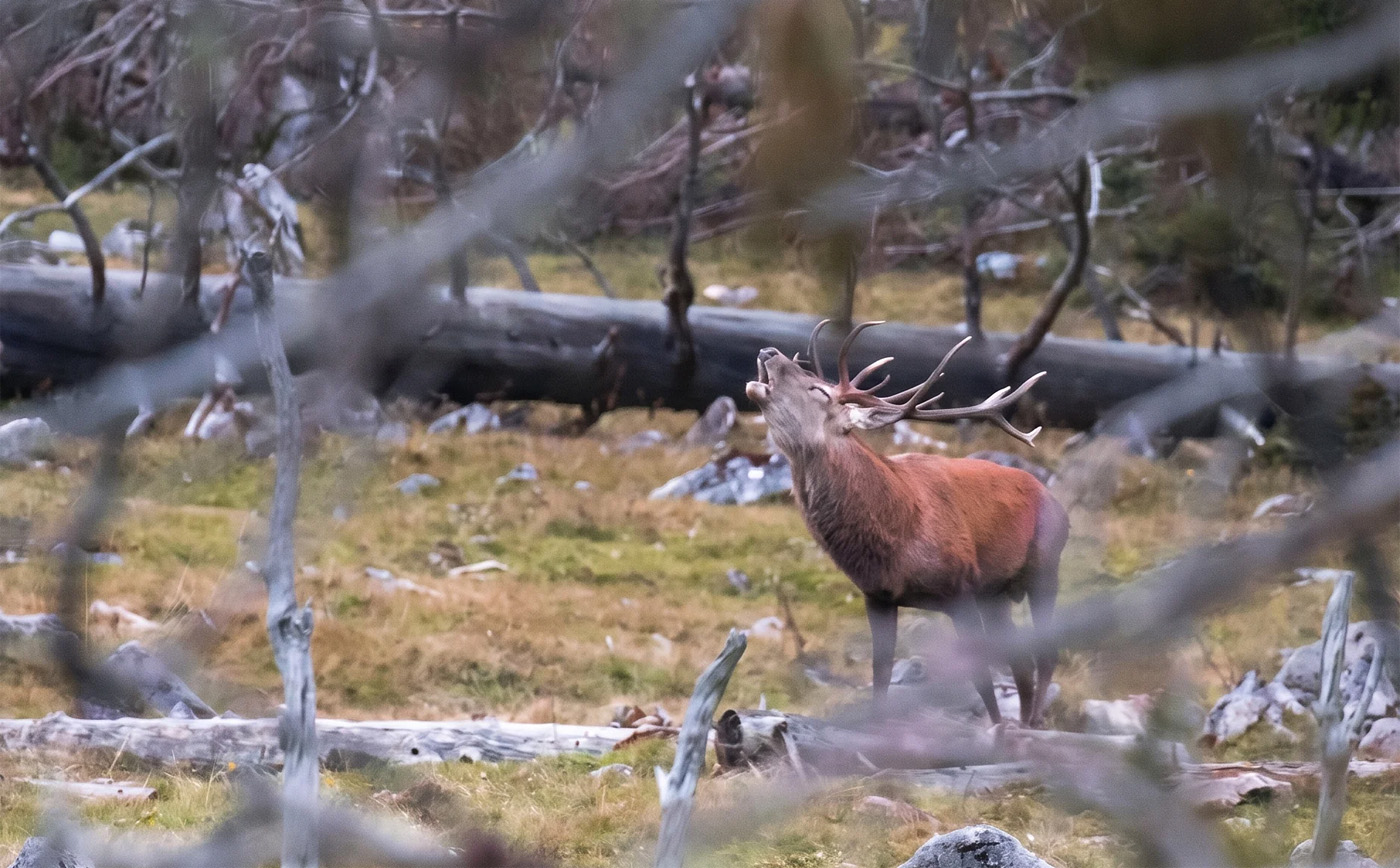
A study published in the journal *Nature Ecology & Evolution*, led by Humboldt-Universität zu Berlin (HU), shows how forest disturbances can improve habitat quality for large herbivores, in some cases over decades. The findings thus highlight the importance and ecological potential of disturbed forest areas. Intensive forestry management and the effects of climate change – such as bark beetle outbreaks and storm damage – have massively increased the frequency of forest disturbances in Europe over recent decades. To better understand the long-term effects of these dynamics on large herbivores, the international research team analysed GPS movement data from wild animals and linked this with high-resolution satellite maps to understand how the animals use disturbed forest areas.
This large-scale collaboration with partners from across Europe compiled data from over 3,000 tagged animals and a total of over 19 million GPS locations, collected between 1997 and 2023. “Collecting GPS data on wild animals is costly and time-consuming. As a result, many studies are often limited to data from just a few animals in small areas,” says Dr Julian Oeser, who authored the study as a postdoctoral researcher at the Institute of Geography at Humboldt-Universität.
Bison, elk, red deer and roe deer make more intensive use of disturbed forest areas
The findings of the 65-strong team of authors show that all the species studied (European bison, moose, red deer and roe deer) make more intensive use of disturbed forest areas than undisturbed stands over a period of at least 35 years. The timing of this use is closely linked to the respective foraging strategies of the species. Whilst bison primarily favour the early stages of the regenerating forest, where grass and young shrubs grow following a disturbance, moose and red deer only utilise the area at a later stage. For them, the regenerating forest provides an ideal food source after ten to 20 years, once young trees have grown back. Another important finding is the significance of area size: all species prefer smaller disturbed areas. Such small and temporary clearings provide easy access to high-quality food whilst allowing the animals to remain close to dense stands of trees, which can protect them from predators or the effects of the weather.
Looking ahead: striking the right balance between wildlife conservation, biodiversity and ecological resilience
Model calculations from the study show that, over the last few decades, forest disturbances have significantly improved habitat quality for large herbivores in many regions of Europe. “Populations of roe deer and red deer have increased in recent decades, and species such as elk and European bison are returning to areas where they were historically eradicated,” explains Prof. Tobias Kümmerle, who led the study. “The increasing disturbances to our forests caused by forestry and climate change may have contributed to this, as our data show a clear and long-lasting positive effect of disturbed forest areas on these wild animals.” From an ecological perspective, this is to be viewed positively, as the influence of large herbivores on forest vegetation can lead to structurally more complex forests and thus promote biodiversity. However, the increasing impact of forest disturbances on large herbivores also presents challenges. “The attraction that disturbed areas exert on the animals could lead to increased damage from browsing on young trees and thus exacerbate conflicts with forestry,” explains Julian Oeser. “The effects on wildlife populations should therefore also be taken into account in forest and wildlife management.” This could help to develop management strategies that strike a balance between timber production, wildlife conservation, biodiversity and ecological resilience.
Publication:
Nature Ecology & Evolution: “Increasing forest disturbance enhances habitat suitability for Europe’s large herbivores”
Julian Oeser, Aleksandra Wołoszyn-Gałęza & Tobias Kuemmerle et al.
DOI: 10.1038/s41559-026-03096-0
Contact:
Prof. Dr. Tobias Kümmerle
Geography Department
Humboldt-Universität zu Berlin
030 2093-45882
tobias.kuemmerle(at)hu-berlin.de
hu.berlin/BioGeo
Press release by Humboldt-Universität zu Berlin, 1 July 2026