
In conversation with Francoise Hesse, who advises customers on stoma care solutions
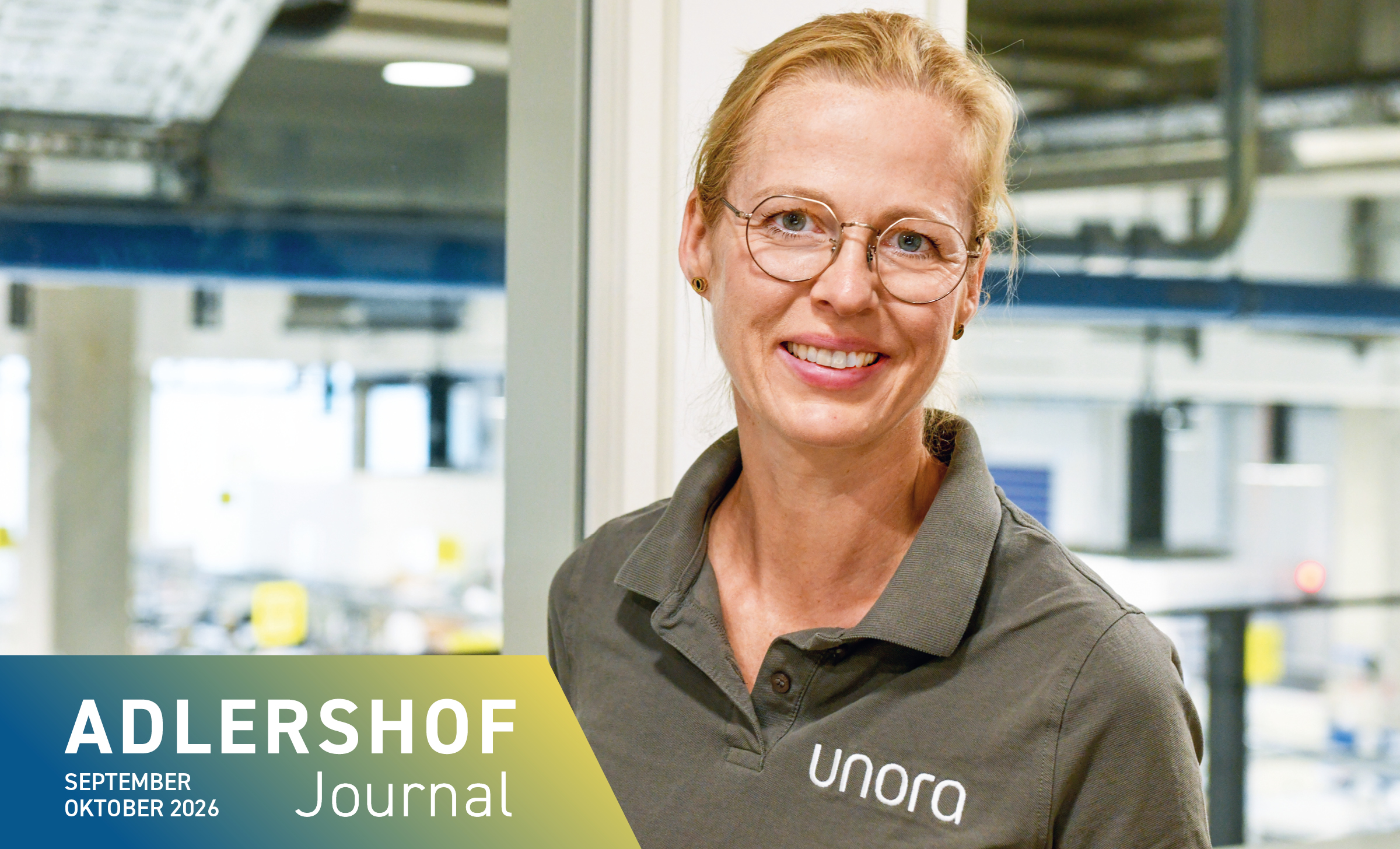
“Stoma care but stylish.” That is how Francoise Hesse describes UNORA's products, which are used to care for artificially created openings in the body, such as those involving the bowel, urinary tract or trachea. Speaking to the customer adviser, who works with clients across Germany, you quickly sense her passion for a sensitive subject.
Adlershof Journal: What sets UNORA's stoma care products apart?
Francoise Hesse: First and foremost, it is our many years of experience. UNORA was established in May 2026 as a spin-off from the medical technology company ForLife. We are therefore building on more than 30 years of experience in developing and manufacturing stoma care products.
Our aim is to offer people products that adapt as closely as possible to their individual needs and everyday lives. A particular focus is on skin protection. That is why we offer our products in five different skin-protection variants. Depending on the requirements, factors such as wound healing, absorption and adhesive strength play important roles. Among other things, we use alginate, a raw material derived from brown algae, which has proven particularly effective in wound management.
Good stoma care needs to be flexible: Every body is different, and the requirements of a product can also change over time. We want to respond to this with a range of different care solutions. Next to product quality, supply security is equally important to us. That is why we source a large proportion of our raw materials from Germany. At the same time, we are expanding our production capacity and are currently establishing an additional site in Berlin-Lichtenrade. This will help us secure our ability to supply customers over the long term and ensure reliable care in the future.
What else do patients want from your products?
Younger patients, for example, are increasingly looking for gelatin-free and vegan products. People want this part of their lives to match who they are. Alongside functionality, appearance plays an important role. Until now, stoma products have generally come in skin tones. However, more and more patients are looking for black appliances that feel less medical and better reflect their personal style. The market is changing, and we are responding to this in our product development.
Your role puts you at the interface between UNORA, healthcare professionals and patients.
I work in field sales, advising and training homecare companies throughout Germany. On the one hand, I work with customers directly, although this has already become a hybrid process. Customers now receive training tools from us. Stoma products are not standardised consumables. They need to be individually selected and adapted. Good care therefore depends not only on nursing expertise but also on knowledge of products and how to use them. Our product training helps healthcare professionals find the right solution for each care situation. I bring their feedback back into the company.
You also know patients' needs from direct experience?
I know what patients need. I am a trained nurse and have worked in acute-care hospitals specialising in highly invasive procedures. Later, I no longer wanted to work shifts for family reasons and spent many years as a team leader at a homecare company. I have been with UNORA for almost three years now, and I really appreciate the good working atmosphere, among other things. Many colleagues here have known each other for a long time, particularly in production. We are like a family. One reason is that we manufacture our products by hand in a complex process and that this work is valued.
When you're not working in healthcare, what do you like to do?
I am a mother of three. I love animals and nature, and I have a horse that needs looking after. Health is also something I care about in my private life: I am involved with Kämpferherzen, a community for people with chronic illnesses and disabilities.
Peggy Moryfor Adlershof Journal