
Latest news from biotechnology, environment and sustainability
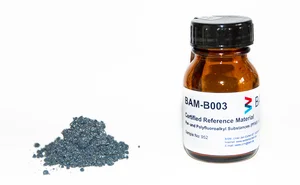
New PFHxA limits: BAM reference material enables reliable measurements
The certified reference material derived from outdoor textiles assists testing laboratories with their analytical work:
Since October 10, 2026, new restrictions have been in force in the EU to perfluorohexanoic acid (PFHxA), its salts, and related substances in clothing, footwear, and accessories. The Federal Institute for Materials…
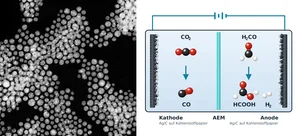
Nanosilver as an electrocatalyst for CO₂ reduction
Simultaneous production of formic acid, hydrogen and CO further enhances the cost-effectiveness of electrolysis:
Via electrolysis, CO2 can be reduced to CO, a raw material for further chemical products such as fuels. Within the GreenQuest Project, an internation team led by HZB chemist Prashanth Menezes has now systematically…
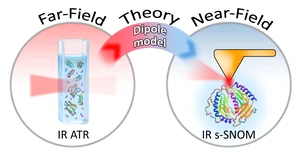
High-resolution insights into individual biomolecules and catalysts
Nanoscale infrared spectroscopy improves the ability to study biological and chemical processes at BESSY II:
Very small biological samples and even individual biomolecules can now be examined under near-physiological conditions with high confidence at the BESSY II infrared beamline with a newly validated and improved…
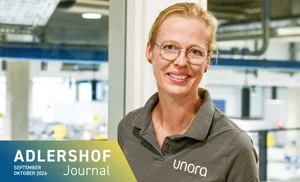
In conversation with Francoise Hesse, who advises customers on stoma care solutions
“Stoma care but stylish.” That is how Francoise Hesse describes UNORA's products, which are used to care for artificially created openings in the body, such as those involving the bowel, urinary tract or trachea.…

Three recipes for the medicine of tomorrow
Osypka Medical, SEMDATEX, and Hofmann & Sommer are developing solutions for the medical sector in Adlershof:
The future of medicine looks promising. Three Adlershof-based companies show what it could look like. Though they are active in very different fields, they have a common goal: detecting diseases earlier, treating them…
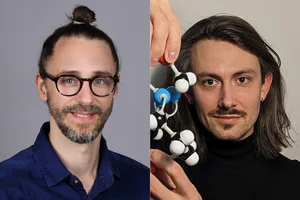
Two ERC Starting Grants for HU projects
Dr Michael Kathan and Dr Maxime Le Calvé awarded 1.5 million euros each in funding from the European Research Council:
Dr Michael Kathan, a researcher at the Department of Chemistry at Humboldt-Universität zu Berlin (HU), has been awarded a Starting Grant from the European Research Council (ERC) for his research project “CATENATOR:…
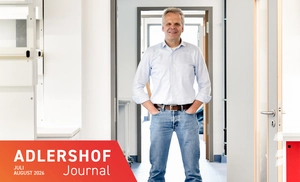
In synch with success
Two companies who broke out in Adlershof now move into their own headquarters:
Both began life as start-ups in Adlershof and are now, as medium-sized companies, moving into their own headquarters on the site. Music is important to both founders, not only in terms of business. “Not the trombone.…

The perfect blend
Nosh.bio’s superfood arrives at Speisemanufaktur Adlershof:
Nosh.bio’s fungal protein is making beef more sustainable. Guests of the restaurant Speisemanufaktur Adlershof can taste the difference for themselves. Whenever the “Cheeseburger Nosh Style” appears on the weekly…
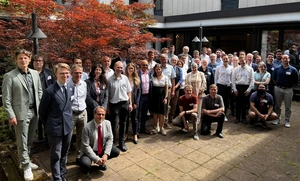
BAM takes a key role in major European research project
The EU project MaterialsCommons is establishing a networked data and AI infrastructure for materials research:
The Federal Institute for Materials Research and Testing (BAM) is taking on a central role in the major European project “MaterialsCommons”, which kicked off in June. Coordinated by Fraunhofer IWM, 26 research…
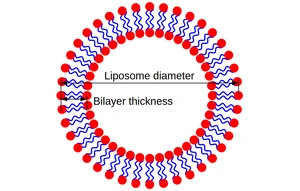
Tutorial on the analysis of liposomes and lipid nanoparticles published
PTB contributes to the measurement of key structural parameters for the characterisation of materials:
Liposomes and lipid nanoparticles (LNPs) are frequently used as carriers in drug delivery and are able to encapsulate active substances such as nucleic acids and peptides and transport them to the site of treatment in…

Magnetic field during catalyst synthesis triples ammonia yield
Team at HZB demonstrates a scalable strategy for developing next-generation electrocatalysts for efficient and sustainable chemical production:
Applying an external magnetic field during the synthesis of CoFe₂O₄ electrocatalysts triples the ammonia yield during electrocatalytic conversion. The magnetic field alters the surface states of the spinel oxide thin…

Materials chemistry shapes the future of catalysis
Emerging developments in operando analytics, data-driven discovery and autonomous robotics are transforming synthesis into the central tool for the targeted development of smart and adaptive electrocatalysts:
The synthesis of materials can serve as a tool for developing smart, adaptive electrocatalysts. This rapidly evolving field of research involves in-situ analytics, data-driven discoveries and autonomous robotics.…

Dual-comb spectroscopy in the focus of research
A recent overview highlights the principles, advances and future potential of this groundbreaking technology:
Atoms and molecules are the fundamental building blocks of matter. Spectroscopy identifies and quantifies chemical species through the unique spectral fingerprints they imprint on light. Spectroscopy has many…

“Support local people in protecting nature around the world”
A study by Humboldt University in Berlin shows that the UN’s nature conservation target could have a direct impact on the lives of almost half the world’s population:
To halt global species extinction, at least 30 per cent of the world’s land and marine areas are to be placed under protection by 2030 and 30 per cent of degraded ecosystems restored, as agreed at the 15th UN…

Environmental Chemistry at BESSY II: Radicals in waterways
HZB research group unravels the light-induced formation of hydroxyl radicals from nitrite:
How do radicals form in aqueous solutions when exposed to UV light? This question is important for health research and environmental protection, for example with regard to the overfertilisation of water bodies by…