
News Archive
Watching a Carbon-Carbon Double Bond Respond to Light
Research team investigates the molecular response following the photoexcitation of ethylene:
Ethylene contains a carbon–carbon double bond, one of the most important structural motifs in organic chemistry. Carbon–carbon double bonds are present in countless molecules, and their response to light plays a…
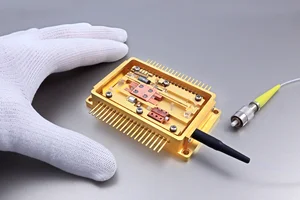
FBH at Photonics Days: from high-power diode lasers to quantum technologies
Ferdinand-Braun-Institut will present the latest developments on 7 and 8 October 2026 in Adlershof:
Ferdinand-Braun-Institut (FBH) will contribute numerous scientific presentations at Photonics Days Berlin Brandenburg on October 7 and 8, 2026. The focus will be on current developments in diode lasers and UV light…
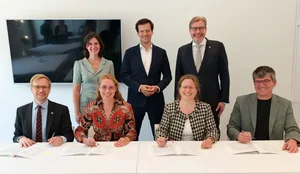
Joint power instead of duplicate structures
The research community in Berlin is pooling its computing power for AI and data research:
Berlin’s research community is further advancing its research excellence by establishing a high-performance, cross-institutional infrastructure for data and AI. With a joint agreement signed on 18 September 2026, the…
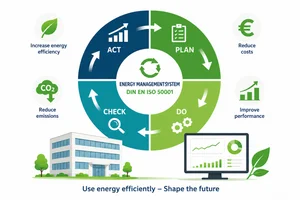
New greenhouse gas report identifies main sources of emissions at HZB
Research institute presents greenhouse gas inventory and certification for its energy management system:
For many years, the Helmholtz-Zentrum Berlin (HZB) has been committed to resource-efficient research and working practices. The centre has set itself the goal of becoming greenhouse gas neutral by 2035. To this end,…
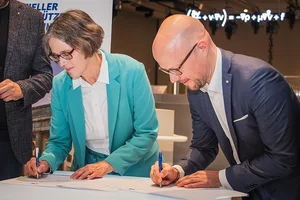
Cooperation agreement signed between Humboldt-Universität and the Berlin Chamber of Industry and Commerce
Working together for talent and innovation ‘Made in Berlin’:
The HU and the Berlin Chamber of Commerce and Industry (IHK) aim to forge even closer links between academia and industry. The President of Humboldt-Universität zu Berlin (HU), Prof. Dr Julia von Blumenthal, and IHK…
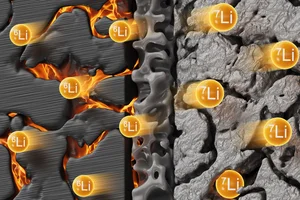
New findings on the lifespan of lithium-ion batteries
Distribution of lithium isotopes serves as a ‘fingerprint’ for aging processes:
The service life of lithium-ion batteries is limited by complex aging processes, the causes of which are often difficult to distinguish from one another. Researchers at the Federal Institute for Materials Research and…
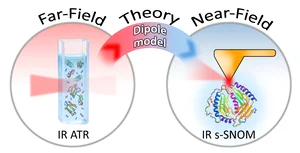
High-resolution insights into individual biomolecules and catalysts
Nanoscale infrared spectroscopy improves the ability to study biological and chemical processes at BESSY II:
Very small biological samples and even individual biomolecules can now be examined under near-physiological conditions with high confidence at the BESSY II infrared beamline with a newly validated and improved…
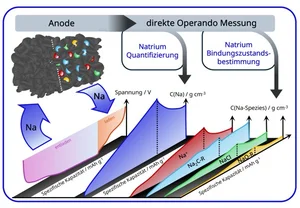
New insights into sodium transport in sodium-ion batteries
Measurements reveal movements and chemical changes in the material:
Sodium-ion batteries are regarded as a promising alternative to today’s lithium-ion batteries. Sodium is widely available and could play an important role, particularly in large-scale stationary energy storage…

From repair medicine to health medicine
Essay by David Matusiewicz, Professor of Healthcare Management at FOM University and Dean of Health & Social Care:
The medicine of the future will not simply become more digital—it will be more connected, preventive, personalised and humane. From my perspective, we are at a turning point where technological innovation and a…
In conversation with Francoise Hesse, who advises customers on stoma care solutions
“Stoma care but stylish.” That is how Francoise Hesse describes UNORA's products, which are used to care for artificially created openings in the body, such as those involving the bowel, urinary tract or trachea.…
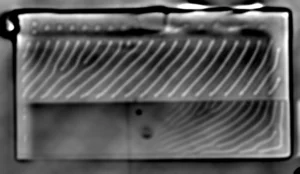
New insights for the development of functional magnetic materials
3D magnetic field experiment at BESSY II takes spintronics a step further:
(Fe0.63Ni0.3Pd0.07)3P or FNPP is a magnetic material that exhibits complex magnetic structures even at room temperature. This makes the material of interest for spintronics, a field that could enable data processing…
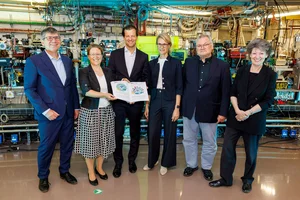
BESSY II is proving its worth – as shown by the impact analysis carried out by DIW Econ
Every euro invested in BESSY yields three euros for Germany, and as many as ten euros for the State of Berlin:
An impact analysis by DIW Econ demonstrates the scientific and economic value of BESSY II. Every euro invested yields three euros for Germany and as much as ten euros for the State of Berlin. Furthermore, the study…
Three recipes for the medicine of tomorrow
Osypka Medical, SEMDATEX, and Hofmann & Sommer are developing solutions for the medical sector in Adlershof:
The future of medicine looks promising. Three Adlershof-based companies show what it could look like. Though they are active in very different fields, they have a common goal: detecting diseases earlier, treating them…
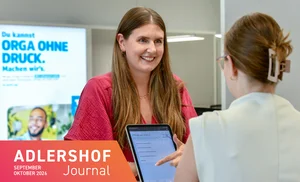
Harmonising care, prevention and day-to-day work
How advisory services and workplace health promotion can support employees through challenging phases of life:
“We want to keep pace with current developments,” says Jennifer Selbmann, a customer adviser at Techniker Krankenkasse (TK), a health insurance provider, in Adlershof. One such development is the growing need for care…
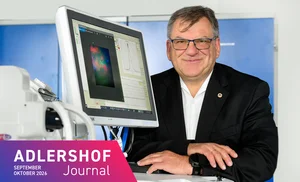
Adlershof, acne and astronauts
JenLab technology offers countless potential applications and is used worldwide:
Its customers range from the European Space Agency (ESA) and global companies such as L’Oréal, Shiseido, Colgate-Palmolive and Procter & Gamble to leading clinics in Boston, Brisbane and Berlin. JenLab was named…
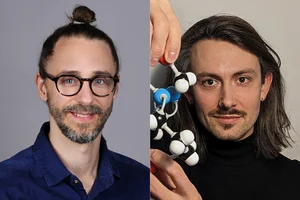
Two ERC Starting Grants for HU projects
Dr Michael Kathan and Dr Maxime Le Calvé awarded 1.5 million euros each in funding from the European Research Council:
Dr Michael Kathan, a researcher at the Department of Chemistry at Humboldt-Universität zu Berlin (HU), has been awarded a Starting Grant from the European Research Council (ERC) for his research project “CATENATOR:…
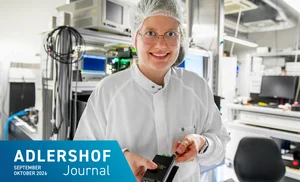
Laser Passion at the Ferdinand-Braun-Institut, Leibniz-Institut für Höchstfrequenztechnik (FBH)
Susann-Alice Seeger is working on a light-based weapon against bacteria:
The tiny beasts can hide away in the deepest recesses. But they don’t stand a chance. A glass fibre can reach them in the remote corners of the nose or throat, where they like to lurk. A pulse of light at a wavelength…
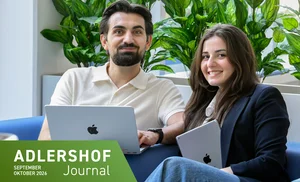
A typo that led to a business idea
DocGaid develops digital assistants that simplify everyday medical practice operations—one step and form at a time:
During the coronavirus pandemic, Nelli Wolf is sitting at the reception desk of her mother’s dental practice in Berlin. She’s in the middle of studying dentistry in Hamburg. With in-person classes cancelled and staff…

When the chemistry is right
Christoph Arenz at Humboldt-Universität zu Berlin researches a special class of lipids:
Christoph Arenz, professor at the HU Department of Chemistry, researches a special class of lipids. What sounds abstract at first glance has very concrete applications in medicine. In this way, basic research becomes…

Adlershof goes back to school
Rethinking learning – at the new comprehensive school, the architecture and teaching methods create plenty of scope for individuality, community and modern education:
The new school year can begin: Standing in front of the impressive new building at Eisenhutweg 129, anyone can sense that a special place of learning has been created here. A place of the future in the middle of a…