
News
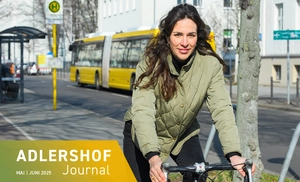
Please mind the gap
Three DLR researchers highlight gender-specific knowledge gaps that prevent the surveying of women’s needs in cars, busses, and trains:
Globally, Germany ranks in the top ten percent for gender equality—but persistent gaps remain. The gender pay gap is the most well-known example. The fact that transport systems are still largely designed by and for…
STELE supports electromobility and the electricity grid in Austria
The platform for networking stakeholders ensures faster results in the expansion of charging infrastructure:
With more and more battery-electric trucks and buses on Austria’s roads, the need for charging infrastructure and the demands on the electricity grid are increasing. To support this ramp-up of e-mobility, the Reiner…
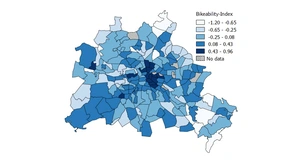
Determine bike friendliness with ‘Bikeability’
DLR transport researchers publish tool for comparing bike friendliness:
Cycling is an integral part of the transport transition, thus research into the willingness to use the bicycle as a means of transport is increasingly coming into focus. While many studies include the concept of…
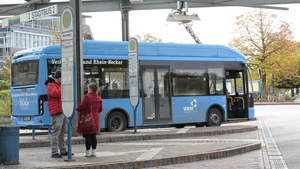
High-performance charging for e-buses in public transport also possible without grid expansion
Successful outcome of the ‘Buffered-HLL’ pilot project for energy- and cost-efficient charging with flywheel mass storage systems:
The nationwide pioneering pilot project ‘Buffered-HLL’ for energy- and cost-efficient high-performance charging with flywheel mass storage for electric buses in local public transport successfully concludes its…
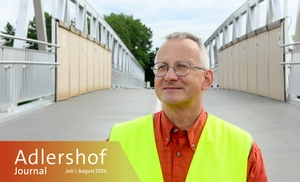
Building bridges
Crossing Adergestell on foot or by bike:
27 January 2024. Adlershof is fast asleep when, a few minutes before 4 am, a giant crane lifts a delicate structure up from Adlergestell, the main street cutting through Adlershof. The structure hanging from the hook…
Charging requirements for electromobility in Germany reassessed up to 2030
Study on publicly accessible charging points and charging capacity sets guidelines for expansion:
The study ‘Charging infrastructure after 2025/2030: Scenarios for the market ramp-up’ by the National Centre for Charging Infrastructure (Leitstelle) has been published in an updated new edition. Its results are not…
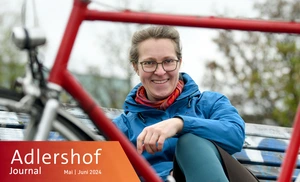
The defiant
At the Adlershof-based Reiner Lemoine Institute (RLI), Christine Kühnel is working towards a future in which energy is 100 percent renewable:
The German government just recently cut funding for the Climate and Transformation Fund. This affects Reiner Lemoine Institut (RLI), among many others. “The consequences are dramatic,” says Christine Kühnel, who has…
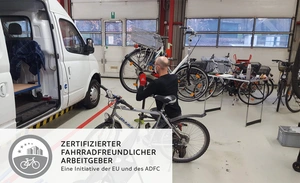
Helmholtz Zentrum Berlin is a bicycle-friendly employer
With the certificate, the research institute aims to be more attractive to employees and improve its carbon footprint:
Since 2017, the German Cyclists' Federation (ADFC) has been awarding the EU-wide "Bicycle-Friendly Employer" certification. The Helmholtz-Zentrum Berlin has now been awarded the coveted silver seal. With this, the HZB…
Funding required for practice-oriented research into electromobility
Broad alliance from research and industry criticises planned cuts in federal funding by the government:
A broad alliance from research and industry is calling on the German government to provide federal funding for application-oriented research into electromobility in the 2024 budget and beyond. In an open letter, the…
Neighbourhood concepts for more sustainable mobility
Reiner Lemoine Institut and Localiser are planning charging infrastructure at HOWOGE locations in Berlin:
RLI and Localiser RLI GmbH are supporting the housing association HOWOGE in a project to develop neighbourhood concepts for more sustainable mobility in Berlin. In this context, a new subproject started in March: RLI…
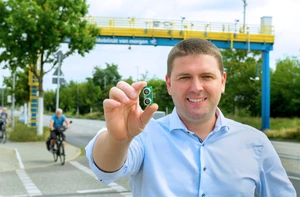
Smart on the road
The Technology Park manages its sustainable growth with a mobility concept:
The technology campus is growing steadily. But so are the problems with traffic. Using a smart mobility concept, WISTA now plans to turn the wheel to help the site to grow sustainably for the benefit of its staff,…
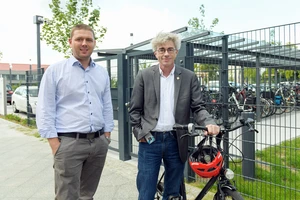
It’s all in the mix
Neighbourhood parking, bike parking, mobility hubs – ideas for a new mobility concept in Adlershof:
The Technology Park Adlershof is growing and continues its success. On the flipside, however, the local transportation infrastructure is under pressure. Congestion, lack of parking, and public transport that is…