
News
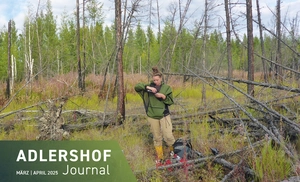
Stünzi’s sense of snow
HU scientist Simone Maria Stünzi studies the vegetation in permafrost soils:
At the Earth Observation Lab of Humboldt-Universität zu Berlin (HU), scientist Simone Maria Stünzi investigates how vegetation interacts with permafrost soil and how these processes are changing against the backdrop…
Scientists caution irreversible climate damages when it comes to overshooting 1.5°C
A study coordinated by Humboldt-Universität has analysed so-called overshoot scenarios and warns of their consequences for the climate and the environment:
Even if it is possible to reverse the rise of global temperatures after a temporary overshoot of 1.5°C, some climate damages triggered at peak warming will be irreversible. These are the findings of 30 scientists…
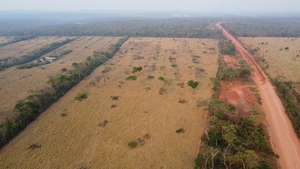
HU Geographer studies investments in environmental and biodiversity conservation in South America
Cross-national analysis shows how funds can be used more efficiently to protect tropical forests:
Scientific studies on the protection of tropical rainforests and dry forests show three trends over the last few decades: since the 1990s, the forest cover has shrunk by an estimated 65,000 to 95,000 km2. At the same…

Greenhouse gas neutral research
HZB wants to be a role model for a clean future:
“When a research institution is heavily focused on renewable energies, it should set an example in its efforts for climate protection,” says Carina Hanke. “Because of this, HZB has committed itself to become…

RLI designs a digital twin for the local heating market in Berlin
On behalf of the Berlin Senate Department for Mobility, Transport, Climate Protection and the Environment, scientists design a digital heat register:
Berlin is ready to tackle the challenges of climate change and take on a pioneering role in the use of renewable energies. A powerful team of energy market, heat market and digital experts will provide support. On…
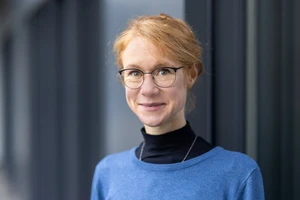
HZB makes progress towards greenhouse gas neutrality by 2035
Carina Hanke, climate and energy manager at HZB, tells about the project’s challenges and results:
The Helmholtz-Zentrum Berlin (HZB) has committed to achieving greenhouse gas neutrality by 2035. To find its main emission sources, it determined its greenhouse gas footprint and had it verified by an external…
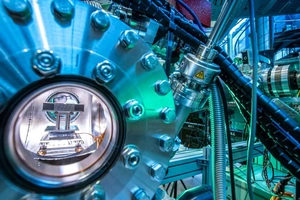
HZB aims to become greenhouse gas neutral by 2035
The research institute presents verified greenhouse gas balance as a basis for savings measures:
HZB is aware of its social responsibility. Now, HZB’s Greenhouse Gas Report is here, after being externally verified, and identifies the main sources of emissions. The report provides the basis for significantly…
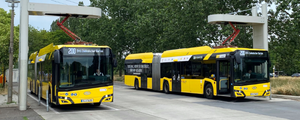
17 articulated buses with electric drive for Berlin
E-MetroBus project presents results:
In the E-MetroBus project, the partner organizations Berliner Verkehrsbetriebe (BVG), TU Berlin and Reiner Lemoine Institute, have integrated seventeen articulated buses with battery-electric drive into their fleet.…
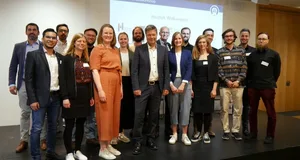
Effects of sector coupling on the German power grid
RLI research team presented the eGoⁿ project, a planning instrument for the electricity grid expansion with flexibility options by integrating other energy sectors:
In early June, a team from the research department Transformation of Energy Systems of the Reiner Lemoine Institute (RLI) presented their eGon project. In the project, the researchers are investigating the effects of…
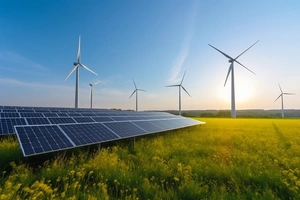
Green Deal Ukraina: HZB launches an Energy & Climate Project
Think tank will assist in rebuilding a sustainable energy system in Ukraine:
Green Deal Ukraina, funded by the German Federal Ministry of Education and Research, is working with partner institutions in Ukraine and Poland to establish an energy and climate think tank in the capital, Kiev. The…

Neighbourhood concepts for more sustainable mobility
Reiner Lemoine Institut and Localiser are planning charging infrastructure at HOWOGE locations in Berlin:
RLI and Localiser RLI GmbH are supporting the housing association HOWOGE in a project to develop neighbourhood concepts for more sustainable mobility in Berlin. In this context, a new subproject started in March: RLI…
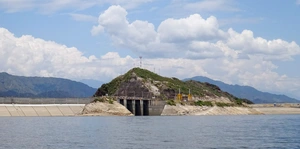
A new hydro-social reality in Colombia
In the Water4Whom project, HU scientists study the effects of mega-dams:
“Colombian mega-dams are creating a new hydro-social reality,” says Prof. Tobias Krüger, Co-Director of IRI THESys and Principal Investigator in the Water security for Whom? research project. “The question that…
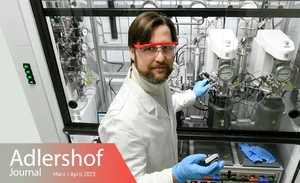
Resource-friendly methanol production
With new procedures, Marek Chęciński wants to considerably improve the climate footprint in the production of the chemical:
Methanol’s carbon footprint is abysmal. Marek Chęciński has now developed a procedure for producing this important substance in a more resource-efficient way. A pilot plant is currently being built in Adlershof, and…
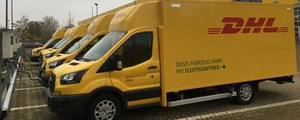
Flexible charging strategy in electrified logistics fleets can relieve pressure on power grids
Reiner Lemoine Institute (RLI), IAV and E.DIS Netz GmbH presented the results of the research project Netz_eLOG on the intelligent grid integration of e-mobility:
Electric fleets in the logistics industry offer secured flexibility for the power grid. Together with grid-serving charging strategies, they can help to avoid bottlenecks or overloads in distribution grids and make…
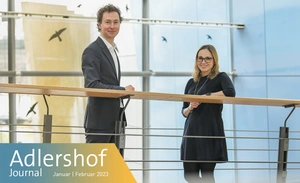
En route to carbon-neutral aviation
An innovative project for sustainable kerosine has been launched at Helmholtz-Zentrum Berlin:
The transition to clean energy, or Energiewende, in transportation has begun. We are moving away from fuels that are damaging to the climate like petrol or diesel and towards carbon-neutral energy sources, including…
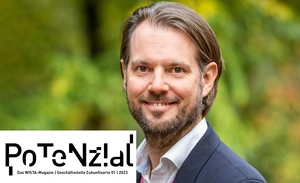
An ecosystem for the transition to green chemistry
The “GreenCHEM” initiative aims to establish the capital’s metropolitan region as a European centre for green chemistry:
Three universities, two chemical companies, and a growing network of industry and research are planning to establish the capital’s metropolitan region as a European centre for green chemistry. The federal government…
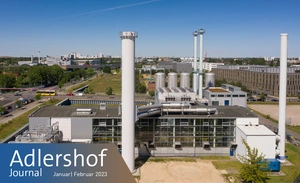
Heat from the depths of the earth
BTB is pursuing a storage project to improve the sustainability of Berlin’s energy supply:
In a pilot project that is one of its kind in Germany, BTB GmbH, an energy provider, wants to make district heating supply more climate-friendly by integrating a seasonal geothermal heat storage facility. Exploratory…

Kathrin Goldammer becomes member of German-Japanese Energy Transition Council
The council aims to promote scientific exchange on energy transition issues between the two countries:
The German Japanese Energy Transition Council (GJETC) has appointed RLI Managing Director Kathrin Goldammer as a member. At the council’s recent meeting in Berlin on November 28-29, she will attend the meeting for the…

40-million-euro research project CARE-O-SENE receives funding
Seven leading South African and German project partners aim to develop novel catalysts for sustainable kerosene:
The international research project CARE-O-SENE (Catalyst Research for Sustainable Kerosene) was granted 30 million euros in funding by the German Federal Ministry of Education and Research (BMBF). Additionally, the…
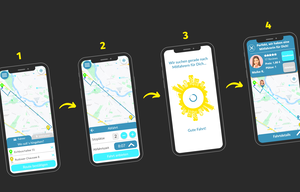
Ride Sharing Revival via App
Test project in Adlershof starting in mid-June / Bonus for residents and employees:
Everyone who drives to work in Adlershof knows the chaotic traffic situation in the morning: long traffic jams and no free parking spaces. When you look around, you quickly notice that there is often just one person…