
News

4-Inch Aluminum Nitride Crystals for Future Markets in Power Electronics and UV Photonics
Innovation project launched by IKZ, PVA TePla AG and Siltronic AG:
Three leading players in semiconductor research and development – the Leibniz-Institut für Kristallzüchtung (IKZ), the PVA TePla AG, and the Siltronic AG – are combining their expertise in a pioneering project to…

ERC Advanced Grants for two HU research projects
Gökce Yurdakul from the Institute of Social Sciences and Hans Börner from the Institute of Chemistry each receive funding of almost 2.5 million euros:
For her project ‘MENBELONG – Belonging for Single Migrant Men: A Cross-Country Comparative Perspective’, Prof Dr Gökce Yurdakul will receive almost EUR 2.5 million as part of an ERC Advanced Grant, of which around…
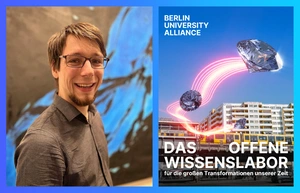
Marco Stucki wins Berlin University Alliance ideas competition
His quantum research project ‘Sawfish Cavity’ is now being used for a poster campaign in Berlin:
Marco Stucki has won the Berlin University Alliance's open knowledge lab competition with a novel process for manufacturing tiny diamond structures for quantum technologies. “Art meets Science” was the motto under…
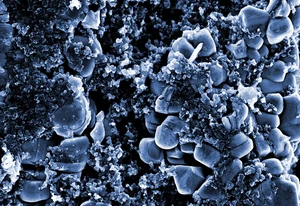
BAM investigates nanomaterials in lithium-ion batteries
Possible risks during production, use and disposal should be assessed more reliably:
The Federal Institute for Materials Research and Testing (BAM) is working with partners from Italy and France to investigate the safety of nanomaterials in lithium-ion batteries (LIBs). The aim is to develop reliable…
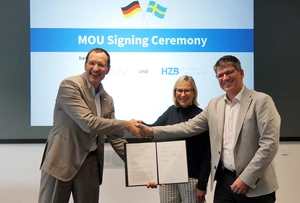
MAX IV and BESSY II initiate new collaboration to advance materials science
Helmholtz-Zentrum Berlin signed a 5-year cooperation agreement with the Swedish national synchrotron laboratory MAX IV:
Swedish national synchrotron laboratory MAX IV and Helmholtz-Zentrum Berlin (HZB) with BESSY II light source jointly announce the signing of a 5-year Cooperation Agreement. The new agreement establishes a framework to…

Michael Naguib is visiting HZB as a Humboldt Research Awardee
The US scientist received funding to research novel nanomaterials for energy and environmental applications:
Professor Michael Naguib, from Tulane University in the USA, is one of the discoverers of a new class of 2D materials: MXenes are characterised by a puff pastry-like structure and have many applications, such as in…
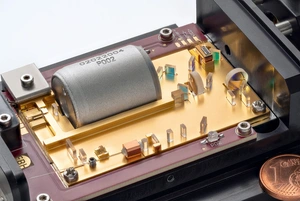
From laser chips to complete systems – FBH at Laser World of Photonics
Ferdinand-Braun-Institut demonstrates its comprehensive expertise in the field of diode lasers / More than 20 presentations at the accompanying CLEO Europe conference:
Once again, the Ferdinand-Braun-Institut, Leibniz-Institut für Höchstfrequenztechnik (FBH) will be presenting its comprehensive range of photonics expertise and solutions at Laser World of Photonics in Munich from…
New cluster of excellence with MBI participation approved
The aim of the “Center for Chiral Electronics” is to harness chiral properties in solids and molecules:
The Center for Chiral Electronics is one of the 25 new clusters of excellence approved in May 2025 as part of the Excellence Strategy of the German federal and state governments. The successful initiative was…

TH Wildau and Helmholtz Zentrum Berlin signed comprehensive cooperation
The aim is to strengthen research and teaching in key technologies:
On 21 May 2025, the Technical University of Applied Sciences Wildau (TH Wildau) and the Helmholtz-Zentrum Berlin für Materialien und Energie (HZB), signed a comprehensive cooperation agreement. The aim is to further…
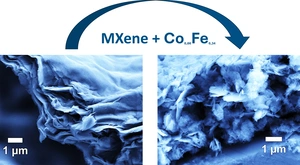
MXenes boost the effectiveness of catalysts for the production of green hydrogen
HZB team shows a new way to highly efficient and inexpensive catalysts:
MXenes are adept at hosting catalytically active particles. This property can be exploited to create more potent catalyst materials that significantly accelerate and enhance the oxygen evolution reaction, which is one…
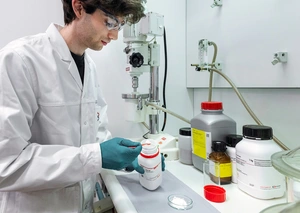
BAM develops powerful alternative to lithium-ion batteries
Innovative approach to make solid-state batteries more sustainable, cheaper, and more efficient:
Researchers at the Federal Institute for Materials Research and Testing (BAM) have developed an innovative approach to make solid-state batteries more powerful and suitable for everyday use. Their goal: batteries that…
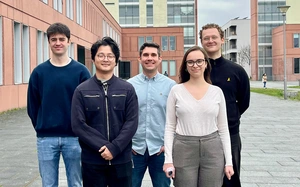
HU junior researcher Alberto Pérez-Bitrián receives Emmy Noether grant
New Research Group OrgXeMet investigates the properties and reactivity of xenon compounds:
The new Emmy Noether research group OrgXeMet, led by Dr. Alberto Pérez-Bitrián has been launched at the Humboldt-Universität zu Berlin (HU). The group will be funded with approximately 1.75 million euros over six…
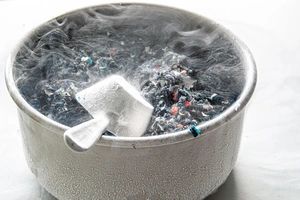
BAM develops certified PFAS reference material made from used outdoor clothing
Important step on the road to a circular economy:
The Federal Institute for Materials Research and Testing (BAM) has developed a reference material for per- and polyfluoroalkyl substances (PFAS) in outdoor textiles. It serves to ensure the reliability of analytical…
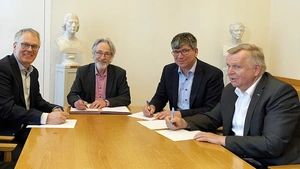
BAM, HZB, and HU Berlin plan joint Berlin Battery Lab
The joint research infrastructure will also be open to industry for battery research projects:
The Federal Institute for Materials Research and Testing (BAM), the Helmholtz-Zentrum Berlin (HZB), and Humboldt University of Berlin (HU Berlin) have signed a memorandum of understanding (MoU) to establish the Berlin…
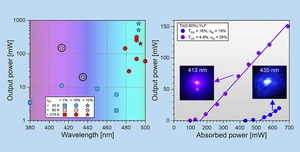
New violet laser developed at IKZ
Researchers at the Center for Laser Materials (ZLM) at the Leibniz-Institut für Kristallzüchtung (IKZ) have developed the most efficient direct violet-emitting solid-state laser:
Lasers with short-wave visible light in the blue or violet range have many practical applications. They are used in metalworking, for example, especially with metals such as copper, which strongly reflect infrared…
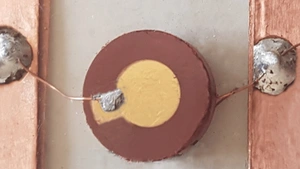
New materials as highly sensitive X-ray detectors
Organic-inorganic hybrid materials are ideally suited and can be produced in a green way using ball milling:
New bismuth-based organic-inorganic hybrid materials show exceptional sensitivity and long-term stability as X-ray detectors, significantly more sensitive than commercial X-ray detectors. In addition, these materials…
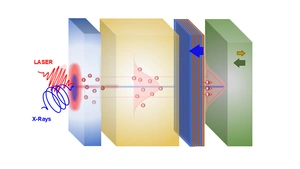
Insight into ultrafast spin processes with femtoslicing
Worldwide unique infrastructure for spintronics research at BESSY II:
An international team has succeeded at BESSY II for the first time to elucidate how ultrafast spin-polarised current pulses can be characterised by measuring the ultrafast demagnetisation in a magnetic layer system…
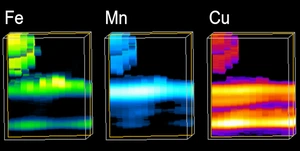
Ageing processes of lithium button cells made visible
For the first time, scientists were able to observe how the composition of lithium-ion batteries changes during charge cycles:
Lithium button cells with electrodes made of nickel-manganese-cobalt oxides (NMC) are very powerful. Unfortunately, their capacity decreases over time. Now, for the first time, a team has used a non-destructive method…

Nanoparticle shield makes luminescent molecules more durable for high-tech applications
Silica particles shield luminescent molecules from oxygen:
They are tiny but glow intensively: special light-emitting molecules used in environmental analysis, medical diagnostics, and energy research. However, their luminescence intensity can be significantly reduced by…

New instrument at BESSY II for investigating energy materials
OÆSE endstation in EMIL offers insights into dynamic electrochemical processes:
A new instrument is now available at BESSY II for investigating catalyst materials, battery electrodes and other energy devices under operating conditions: the Operando Absorption and Emission Spectroscopy on EMIL…