
News Archive

How long do perovskite solar cells last?
Study from the HZB shows which methods are useful for predicting long-term stability and where further research is needed:
Perovskite solar cells (PSCs) could conquer the mass market within a few years, perhaps even being produced in Europe. Their large-scale production is highly cost-effective, and unlike silicon solar cells, their…
BAM takes a key role in major European research project
The EU project MaterialsCommons is establishing a networked data and AI infrastructure for materials research:
The Federal Institute for Materials Research and Testing (BAM) is taking on a central role in the major European project “MaterialsCommons”, which kicked off in June. Coordinated by Fraunhofer IWM, 26 research…

ISO honors Michael Krumrey for excellence
The International Organization for Standardization recognizes the PTB scientist for his many years of leadership:
The head of the department 7.2 “X-ray metrology with synchrotron radiation” at the National Metrology Institute of Germany, PTB, in Adlershof, Dr Michael Krumrey, has received the ISO Excellence Award. The award…

Superconducting TES array X-ray spectrometer goes into operation at BESSY II
The instrument is around 100 to 1,000 times more efficient at detecting photons than conventional devices:
The TES-Spectrometer was developed within a collaboration between the HZB, the MPI-CEC (Mühlheim-an-der-Ruhr, Germany) and the NIST (Boulder CO, USA) and is now in operation at BESSY II, as the only TES-Spectrometer…

Waiting platform for cyclists as a pilot project
Stopping at the traffic lights at the junction of Groß-Berliner Damm and Segelfliegerdamm in Johannisthal now more convenient:
On June 1, 2026, the Department of Streets and Green Spaces installed the first waiting platform for cyclists in Treptow-Köpenick at the intersection of Groß-Berliner Damm and Segelfliegerdamm in Johannisthal (toward…

ASCEND – A New Era in Catalysis
Federal Research Minister Dorothee Bär launches €30 million project in Berlin:
On 11 June 2026, the Helmholtz-Zentrum Berlin (HZB) in Adlershof hosted the launch of ASCEND (Accelerated Solutions for Catalysis using Emerging Nanotechnology and Digital Innovation). The event took place in the…

Artificial Star: How Berlin Laser Technology Helps Explore the Universe
TOPTICA EAGLEYARD demonstrated its Guide Star Laser, which generates an artificial guide star in the atmosphere:
On 8 June 2026, an artificial star above Potsdam became a visible symbol of a regional success story. During a joint event hosted by the Leibniz Institute for Astrophysics Potsdam (AIP) and TOPTICA EAGLEYARD,…
Tutorial on the analysis of liposomes and lipid nanoparticles published
PTB contributes to the measurement of key structural parameters for the characterisation of materials:
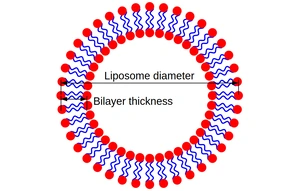
Liposomes and lipid nanoparticles (LNPs) are frequently used as carriers in drug delivery and are able to encapsulate active substances such as nucleic acids and peptides and transport them to the site of treatment in…

The Long Night of Science in Adlershof once again delighted thousands
On 6 June, large numbers of visitors came to the Technology Park:
Following the spectacular drone show to mark the 25th anniversary, the 2026 Long Night of Science in Adlershof saw a return to something closer to “business as usual”. However, enthusiasm for science remains…

Humboldt-Universität and quantumReality extend their research collaboration in electrochemistry
Successful Research Collaboration Enters the Next Phase: Humboldt-Universität zu Berlin and Potsdam-based Science VC quantumReality Extend Cooperation to Develop Digital Twins for Electrolysis Plants by Two Years with…

X-ray analysis reveals overpainted fascist symbols
At HZB, a work by painter Erich Mercker was examined:
Erich Mercker was a successful painter during the Nazi era and in the years that followed. After 1945, he covered up Nazi symbols in at least one of his paintings. With an interdisciplinary team, physicist Dr Ioanna…

Radiation damage or intrinsic material change?
PTB study reveals dose limits for reliable X-ray analysis of battery materials:
X-ray radiation provides insight into the chemical changes in battery materials during battery operation ("operando"), but is also the cause of radiation-generated effects that can superimpose and falsify measurement…

Magnon momentum microscopy: A new window into nanoscale spin-waves
A new type of momentum microscopy makes it possible to image magnons directly in two-dimensional reciprocal space:
An international team lead by the Max Born Institute has developed a new type of momentum microscopy to image magnons — the quanta of collectively excited spins — directly in two-dimensional reciprocal space using…
Beliebte Digital Health Week: Kostenlose Online-Impulse für mehr Energie und weniger Hitze-Stress im Sommer
Vom 16. bis 19. Juni 2026 hält das Gesundheitsnetzwerk Adlershof wieder viele tolle Angebote bereit:
Bleiben Sie auch an heißen Sommertagen gesund und leistungsfähig: Vom 16. bis 19. Juni 2026 lädt das Gesundheitsnetzwerk Adlershof zur zweiten Digital Health Week (DHW) in diesem Jahr ein. Das abwechslungsreiche…

Magnetic field during catalyst synthesis triples ammonia yield
Team at HZB demonstrates a scalable strategy for developing next-generation electrocatalysts for efficient and sustainable chemical production:
Applying an external magnetic field during the synthesis of CoFe₂O₄ electrocatalysts triples the ammonia yield during electrocatalytic conversion. The magnetic field alters the surface states of the spinel oxide thin…

Striking a cord in battery research with own scientific contributions
Co-author Dietmar Lerche honoured for a Top viewed Wiley article in 2025:
LUM GmbH is renowned for its scientific and metrological expertise, specializing in particle characterization, stability assessment of suspensions and emulsions, determination of adhesion strengths, as well as quality…
DFG is funding a research project on integral deformations in holography at HU
Early-career researcher Stijn van Tongeren focuses on highly complex quantum field theories in theoretical physics:
Three new research groups and projects funded by the German Research Foundation’s (DFG) Heisenberg Programme are now active at Humboldt-Universität zu Berlin (HU), including the group led by physicist Dr Stijn van…

Materials chemistry shapes the future of catalysis
Emerging developments in operando analytics, data-driven discovery and autonomous robotics are transforming synthesis into the central tool for the targeted development of smart and adaptive electrocatalysts:
The synthesis of materials can serve as a tool for developing smart, adaptive electrocatalysts. This rapidly evolving field of research involves in-situ analytics, data-driven discoveries and autonomous robotics.…

Strategic research agenda for safe advanced materials published
Germany's federal agencies responsible for human and environmental safety present research needs from a regulatory perspective:
Advanced materials hold the potential to address global and societal challenges in e.g. health care, energy transition and substituting substances of concern or critical raw materials. However, to fully exploit…

Dual-comb spectroscopy in the focus of research
A recent overview highlights the principles, advances and future potential of this groundbreaking technology:
Atoms and molecules are the fundamental building blocks of matter. Spectroscopy identifies and quantifies chemical species through the unique spectral fingerprints they imprint on light. Spectroscopy has many…