
News from the Adlershof University Campus
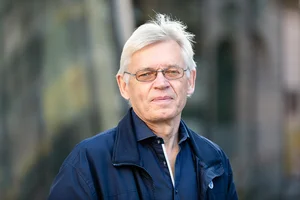
HZB congratulates Peter Hegemann on winning the Nobel Prize
His research groups have been using the Adlershof-based BESSY II X-ray source for their experiments for many years:
The Helmholtz-Zentrum Berlin (HZB) extends its warmest congratulations to Peter Hegemann, Professor of Neuroscience and Experimental Biophysics at Humboldt University in Berlin. Together with Prof. Georg Nagel (Julius…

HU astroparticle physics group led by Prof. Kowalski made a significant contribution to the Nobel Prize win
Adlershof-based research team has been involved in neutrino research for more than 25 years:
The Royal Swedish Academy of Sciences has awarded the Belgian-American researcher Francis Halzen with the 2026 Nobel Prize in Physics for his “pioneering contributions to the IceCube neutrino observatory and the…
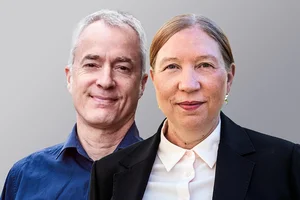
New Vice-Presidents at Humboldt-Universität zu Berlin
Professor Dr Ulf Leser and Professor Dr Beate Lütke took up their new posts on 1 October 2026:
Prof. Ulf Leser is responsible for the Research portfolio, whilst Prof. Beate Lütke is responsible for the Teaching and Student Affairs portfolio. The HU Council elected both of them on 28 April 2026. They succeed…
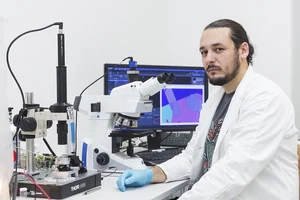
Internationally recognized materials scientist joins BTU and IKZ
Aleksandar Matkovic, expert in complex material structures and ERC Starting Grant recipient, conducts research at the interface of materials and devices:
Internationally recognized materials scientist Prof. Dr. Aleksandar Matkovic will take over as head of the “Nanostructures & Thin Films” department at the Leibniz-Institut für Kristallzüchtung (IKZ) on October 1,…
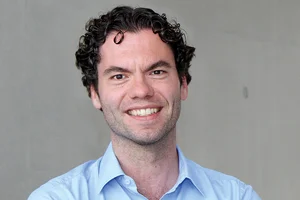
Christian Hackenberger receives the UNIPRENEURS Award for outstanding commitment to entrepreneurship
The HU professor, researcher and entrepreneur has been honoured for his commitment to spin-offs and entrepreneurship:
Every three years, UNIPRENEURS awards Germany’s highest honour for outstanding achievements in promoting entrepreneurship, technology transfer and spin-offs at universities and non-university research institutions.…
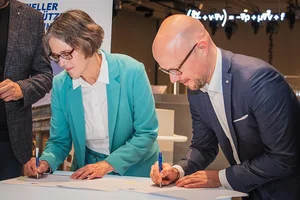
Cooperation agreement signed between Humboldt-Universität and the Berlin Chamber of Industry and Commerce
Working together for talent and innovation ‘Made in Berlin’:
The HU and the Berlin Chamber of Commerce and Industry (IHK) aim to forge even closer links between academia and industry. The President of Humboldt-Universität zu Berlin (HU), Prof. Dr Julia von Blumenthal, and IHK…
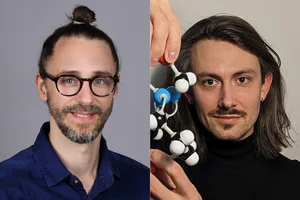
Two ERC Starting Grants for HU projects
Dr Michael Kathan and Dr Maxime Le Calvé awarded 1.5 million euros each in funding from the European Research Council:
Dr Michael Kathan, a researcher at the Department of Chemistry at Humboldt-Universität zu Berlin (HU), has been awarded a Starting Grant from the European Research Council (ERC) for his research project “CATENATOR:…

When the chemistry is right
Christoph Arenz at Humboldt-Universität zu Berlin researches a special class of lipids:
Christoph Arenz, professor at the HU Department of Chemistry, researches a special class of lipids. What sounds abstract at first glance has very concrete applications in medicine. In this way, basic research becomes…
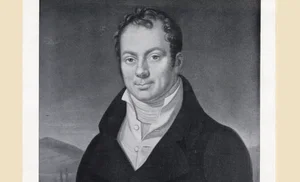
Theoretical Mathematics in Berlin: ‘Two Centuries of Moduli’ conference at the HU
Mathematicians from all over the world are gathering in Berlin to honour the *Crelle Journal*:
More than 200 mathematicians from around the world will be gathering at Humboldt-Universität zu Berlin (HU) from 7 to 11 September to explore issues in theoretical mathematics, particularly in the field of geometry…
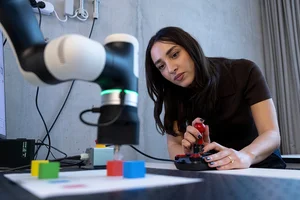
New Master’s degree programme in Science of Materials launches at Humboldt-Universität
At the Adlershof Campus, Master’s students can gain qualifications in modern materials research:
From the 2026/27 winter semester, Humboldt-Universität zu Berlin will be offering a new English-taught Master‘s degree programme in Science of Materials. Applications can be submitted until 31 August 2026. The…

Taiga forests store carbon in the permafrost
HU study demonstrates the ecosystem service provided by boreal forests as a key contribution to climate protection:
A study by HU shows that, from Alaska to Siberia, boreal forests make a significant contribution to climate protection. The tree canopies protect the frozen ground from thawing deeper down, ensuring that the carbon…
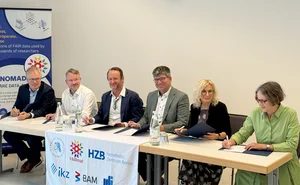
Five Berlin-based research institutions join forces in data-driven materials research
Long-term collaboration agreed in the fields of research data, data infrastructures and AI:
Research data is regarded as key to materials research in the age of artificial intelligence (AI). Five Berlin-based research institutions have now signed a Memorandum of Understanding (MoU) to establish long-term…
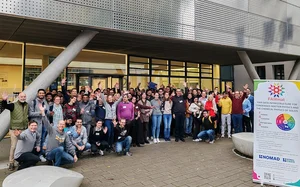
DFG continues to fund the HU project consortium FAIRmat until the end of 2038
In the new funding period, FAIRmat is placing greater emphasis on AI for data-driven science:
FAIRmat is a consortium for data infrastructure in the materials sciences, which has been coordinated by Humboldt-Universität zu Berlin (HU) since its foundation in 2021. It forms part of the National Research Data…
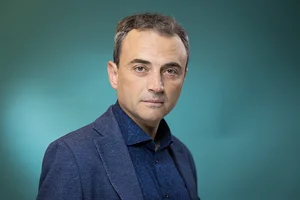
Einstein Foundation awards grants to five researchers at Humboldt-Universität
The Foundation is strengthening Berlin as a centre of science and research while also supporting its international connectedness:
Einstein Chair Focus on Algebraic Curves Gavril Farkas, Professor of Algebraic Geometry at Humboldt-Universität since 2007, is to become an Einstein Professor. He is regarded as one of the world’s leading experts in…
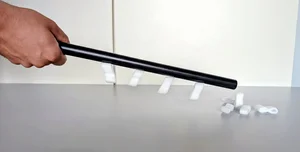
New atomic trap boosts quantum performance by utilising surface forces
Researchers at HU have developed a new method for trapping and controlling atoms:
Trapping and controlling atoms is one of the technical foundations for utilising their quantum mechanical properties – for example, for secure communication in quantum networks or in quantum computing. Many novel…
Events / Dates
Center for the Science of Materials Berlin (CSMB)
-
ST3AM Adlershof
-
Leap Quantum Technology Hub & Events
Erwin Schrödinger-Zentrum
Bunsen-Saal
-
a:head area
-
Leap Quantum Technology Hub & Events